
Table of Contents
What is a Quiet Centrifugal Blower?
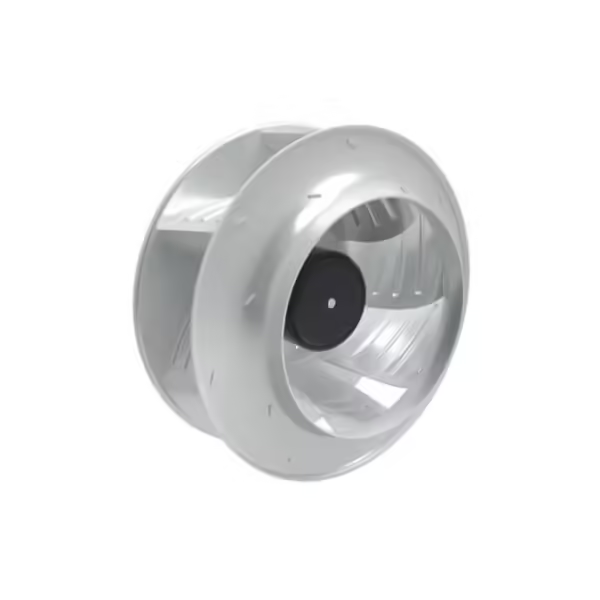
A quiet centrifugal blower is a type of mechanical fan designed to move air or gases efficiently while minimizing noise. Unlike axial fans that push air along the axis of rotation, centrifugal blowers use a rotating impeller to draw air in and accelerate it through a 90-degree turn, creating higher pressure and consistent airflow. This design makes them ideal for applications requiring precise air movement with minimal sound.
Quiet centrifugal blowers are commonly used in industrial, commercial, and even residential environments. Their low-noise operation ensures that workplaces remain safe and comfortable, while their robust design guarantees long-term reliability. Noise levels are measured in decibels (dB), and modern quiet centrifugal blowers typically operate between 50–70 dB, depending on the size and application.
Key features of quiet centrifugal blowers include:
- High-efficiency impellers for consistent airflow
- Low noise operation suitable for sensitive environments
- Durable construction for long service life
- Compatibility with various power sources and voltages (e.g., 120V, 220V)
Benefits of Using a Quiet Centrifugal Blower
Investing in a quiet centrifugal blower provides multiple advantages for businesses and industrial operations:
- Improved Efficiency and Airflow Performance
Quiet centrifugal blowers are engineered to deliver precise airflow and pressure, ensuring optimal performance for ventilation, HVAC systems, and industrial processes. - Reduced Noise for Workplace Safety
Noise reduction is critical in workplaces. Using a quiet blower enhances comfort and complies with occupational safety regulations. - Energy Savings and Cost Efficiency
Modern centrifugal blowers are designed with energy-efficient motors, reducing electricity consumption while maintaining high airflow performance. - Long Lifespan and Low Maintenance
These blowers require minimal maintenance, with routine inspections ensuring years of reliable operation.
By incorporating quiet centrifugal blowers, companies can enhance productivity, improve environmental conditions, and reduce operating costs simultaneously.
Applications of Quiet Centrifugal Blowers
Quiet centrifugal blowers are highly versatile and applicable across multiple industries:
- HVAC Systems: Ideal for industrial and residential heating, ventilation, and air conditioning.
- Laboratories and Clean Rooms: Provides precise, low-noise airflow for sensitive experiments and processes.
- Industrial Ventilation: Supports manufacturing facilities, factories, and workshops, ensuring proper air circulation.
- Server Rooms and Data Centers: Maintains airflow and cooling without disturbing personnel or equipment.
- Greenhouses and Agricultural Facilities: Enhances ventilation for optimal plant growth and controlled environments.
The versatility of quiet centrifugal blowers makes them a critical component in systems requiring high efficiency, low noise, and reliable air movement.
How to Choose the Right Quiet Centrifugal Blower
Selecting the right blower depends on your specific requirements:
- Size and Airflow Requirements: Determine the required airflow (CFM) and pressure (Pa) based on your space or system.
- Noise Level Considerations: Check the blower’s decibel rating to ensure compliance with your noise standards.
- Power and Voltage Options: Blowers are available in multiple voltages (120V, 220V) and motor types.
- Material and Build Quality: Choose durable materials for long-lasting performance in industrial settings.
- Budget Considerations: Balance cost with performance and efficiency for the best ROI.
Following these guidelines ensures that you select a quiet centrifugal blower that meets both operational and environmental needs.
Comparing Quiet Centrifugal Blowers with Other Blower Types
Understanding the differences between blower types can help you make an informed purchase:
- Quiet Centrifugal vs Standard Centrifugal Blowers: Quiet models reduce noise without sacrificing airflow or pressure.
- Quiet Centrifugal vs Axial Fans: Axial fans are better for moving large volumes at low pressure, while centrifugal blowers excel at higher pressure and consistent airflow.
- Performance and Noise Comparison: Quiet centrifugal blowers achieve higher efficiency at lower noise levels, making them ideal for noise-sensitive environments.
Comparisons like these highlight the value of investing in a quiet centrifugal blower over other blower types.
Technical Specifications and Performance Metrics
When choosing a quiet centrifugal blower, technical specifications are crucial:
- Airflow (CFM) and Pressure (Pa/PSI): Ensures compatibility with your ventilation or industrial system.
- Noise Levels (dB): Modern designs operate at 50–70 dB, ideal for offices, labs, and industrial environments.
- RPM and Motor Efficiency: Efficient motors reduce energy consumption while maintaining performance.
- Power Consumption and Energy Efficiency: Optimized for cost-effective operation.
- Material and Durability: Constructed from high-quality steel or aluminum to withstand long-term industrial use.
A well-specified blower guarantees reliability, energy savings, and minimal operational disruption.
Maintenance and Troubleshooting Tips
Proper maintenance ensures the longevity and efficiency of your quiet centrifugal blower:
- Routine Cleaning and Inspection: Remove dust and debris to prevent motor strain.
- Common Issues and Fixes: Address unusual noise, vibration, or reduced airflow promptly.
- Extending Lifespan: Lubricate moving parts and check electrical connections regularly.
Routine maintenance not only prolongs service life but also ensures consistent, quiet operation, reducing downtime.
Why Choose Our Quiet Centrifugal Blowers
As a leading manufacturer, we provide quiet centrifugal blowers designed for high performance, durability, and low noise. Here’s why customers choose us:
- Manufacturing Expertise and Quality Assurance: Our products undergo rigorous quality control to ensure reliability.
- Customizable Solutions: We offer tailored blowers for various industries and specific project requirements.
- Competitive Pricing and After-Sales Support: Our solutions provide excellent value and ongoing technical support.
- Proven Performance: Used in HVAC, labs, industrial ventilation, greenhouses, and server rooms worldwide.
By choosing our quiet centrifugal blowers, you get a product engineered for maximum efficiency, low noise, and long-term durability.
Conclusion
Quiet centrifugal blowers are essential for any industry or facility that requires efficient, low-noise airflow. Their applications range from HVAC systems and clean rooms to industrial manufacturing and server rooms. Choosing the right blower improves energy efficiency, enhances operational performance, and creates a safer, quieter work environment.
As a manufacturer, we provide high-quality, durable, and energy-efficient quiet centrifugal blowers tailored to your needs. Looking for a reliable quiet centrifugal blower for your facility? Contact us today to discuss your requirements and get a personalized solution.
FAQ
Q1: What is a quiet centrifugal blower?
A: A quiet centrifugal blower is a type of fan that moves air efficiently while minimizing noise. It uses a rotating impeller to generate high-pressure airflow, making it ideal for industrial, commercial, and residential applications where low noise is important.
Q2: What are the main benefits of using a quiet centrifugal blower?
A: The main benefits include reduced noise, energy efficiency, improved airflow performance, and long-lasting durability. These blowers are perfect for HVAC systems, clean rooms, server rooms, and industrial ventilation.
Q3: How do I choose the right quiet centrifugal blower for my facility?
A: Consider airflow requirements (CFM), pressure needs, noise level (dB), motor voltage, and material durability. Selecting a blower that matches your specific system ensures optimal performance and efficiency.
Q4: Where can quiet centrifugal blowers be used?
A: They can be used in HVAC systems, laboratories, industrial ventilation, server rooms, greenhouses, and other environments that require consistent airflow with low noise.
Q5: How do I maintain a quiet centrifugal blower?
A: Regular maintenance includes cleaning the blower, checking for unusual noise or vibration, lubricating moving parts, and inspecting electrical connections. Proper maintenance extends the blower’s lifespan and ensures quiet, efficient operation.