
Table of Contents
Introduction
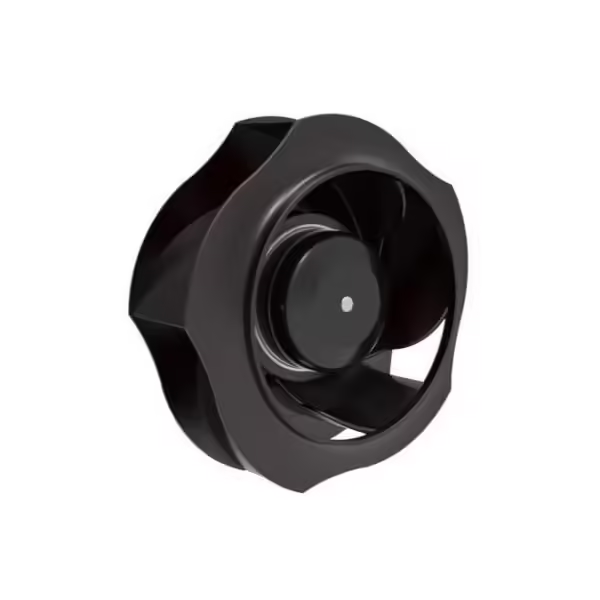
In today’s industrial and commercial environment, energy efficiency is not just a trend—it’s a necessity. An energy-saving centrifugal fan is designed to deliver reliable airflow while reducing energy consumption, lowering operational costs, and minimizing environmental impact.
These fans are ideal for factories, HVAC systems, data centers, agricultural facilities, and any application where energy efficiency and consistent performance are critical.
How Energy-Saving Centrifugal Fans Work
Energy-saving centrifugal fans incorporate advanced design and technology to optimize performance:
- Aerodynamically Optimized Blades – Reduce turbulence and maximize airflow per unit of energy.
- High-Efficiency Motors – Convert electrical energy into airflow with minimal losses.
- Variable Speed Drives (VSD) – Allow fans to adjust airflow based on system demand.
- Low-Friction Bearings – Reduce energy loss due to mechanical resistance.
These features ensure the fan provides maximum airflow with minimum energy consumption, making it ideal for cost-conscious operations.
Key Benefits of Energy-Saving Centrifugal Fans
- Lower Energy Bills – Optimized motor and blade design reduce electricity consumption.
- Reduced Carbon Footprint – Efficient operation minimizes environmental impact.
- Consistent Performance – Maintains airflow and pressure even under varying load conditions.
- Quiet Operation – Smooth blade design reduces operational noise.
- Durable Construction – Long-lasting materials reduce maintenance and replacement costs.
- Flexible Integration – Available in floor-mounted, inline, or duct-mounted configurations.
Types of Energy-Saving Centrifugal Fans
Forward-Curved Energy-Saving Fans
Ideal for low-pressure applications such as commercial HVAC and small industrial systems.
Backward-Curved Energy-Saving Fans
Provide higher efficiency for industrial processes and large-scale ventilation systems.
High-Capacity Energy-Saving Fans
Designed to move large volumes of air efficiently while minimizing energy consumption.
Variable-Speed Energy-Saving Fans
Equipped with VSD technology to adapt airflow to changing system requirements.
Comparison Table: Standard vs Energy-Saving Centrifugal Fans
| Feature | Standard Fan | Energy-Saving Fan |
|---|---|---|
| Power Consumption | Moderate | Lower |
| Efficiency | Moderate | High |
| Noise Level | Moderate | Low |
| Maintenance | Standard | Reduced |
| Best Use Case | General ventilation | Industrial/commercial HVAC, cost-sensitive applications |
Applications of Energy-Saving Centrifugal Fans
Energy-saving fans are used in a variety of environments:
- Industrial Ventilation – Factories, workshops, and processing plants.
- Commercial HVAC Systems – Offices, malls, hotels, and hospitals.
- Data Centers – Efficient airflow for cooling high-density servers.
- Agricultural Facilities – Ventilation for barns, greenhouses, and storage areas.
- Dust and Fume Extraction – Efficient removal of particulate-laden air.
- Residential and Light Commercial – Spaces requiring reliable, low-energy ventilation.
How to Choose the Right Energy-Saving Fan
- Airflow and Pressure Requirements (CFM & Pa) – Ensure the fan meets system demands efficiently.
- Motor Efficiency and Power – Select motors rated for low energy consumption.
- Variable Speed or Fixed Speed – Consider VSD for systems with fluctuating airflow needs.
- Material and Durability – Resistant to dust, corrosion, and long-term operation.
- Noise Requirements – Consider acoustic housing or blade design for quiet environments.
- Installation Space – Determine whether inline, floor-mounted, or duct-mounted suits your system.
- Maintenance and Accessibility – Ensure easy access for inspection and cleaning.
Maintenance Tips for Energy-Saving Fans
- Regularly inspect impellers and housing for dust accumulation or wear.
- Lubricate bearings if necessary, focusing on low-friction components.
- Monitor energy consumption to ensure fan operates efficiently.
- Keep ductwork, filters, and airflow paths clean.
- Schedule preventive maintenance for long-term reliability.
Case Studies and Practical Examples
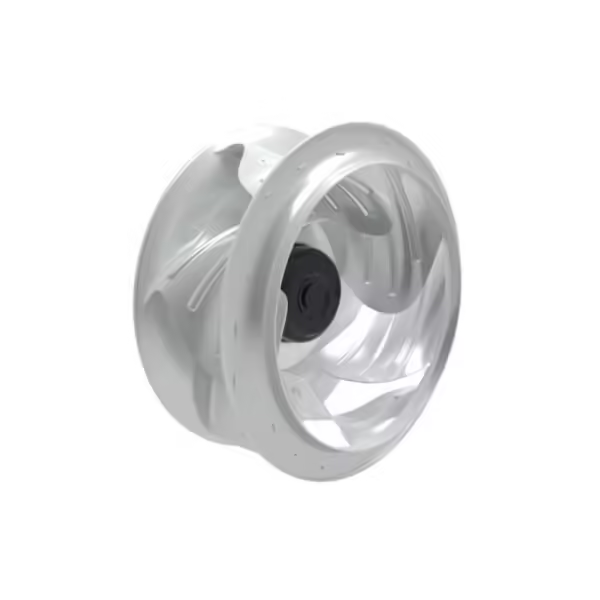
- Factory Ventilation Upgrade: Replacing standard fans with energy-saving fans reduced energy consumption by 20% while maintaining required airflow.
- Data Center Cooling: VSD-equipped energy-saving fans allowed dynamic airflow adjustment, reducing electricity costs and noise levels.
- Commercial HVAC Retrofits: Energy-saving backward-curved fans increased efficiency in large buildings while lowering operational costs.
FAQ
Q1: What is an energy-saving centrifugal fan?
A: A fan designed to deliver airflow efficiently while minimizing energy consumption and operating costs.
Q2: Where are energy-saving fans used?
A: Industrial ventilation, commercial HVAC, data centers, agricultural facilities, and dust/fume extraction systems.
Q3: How do I select the right energy-saving fan?
A: Consider airflow, static pressure, motor efficiency, variable speed options, materials, and noise levels.
Q4: Do energy-saving fans require special maintenance?
A: No, standard preventive maintenance suffices, with attention to lubrication, cleaning, and monitoring performance.
Q5: Can energy-saving fans significantly reduce electricity bills?
A: Yes, high-efficiency motors, optimized blades, and variable speed operation can substantially lower energy costs.
Conclusion
An energy-saving centrifugal fan is a smart investment for industrial, commercial, and agricultural operations. By combining high efficiency, low energy consumption, and reliable performance, these fans reduce operational costs while maintaining consistent airflow. Selecting the right fan, installing it properly, and performing regular maintenance ensures long-term energy savings and system reliability.