
Table of Contents
Introduction
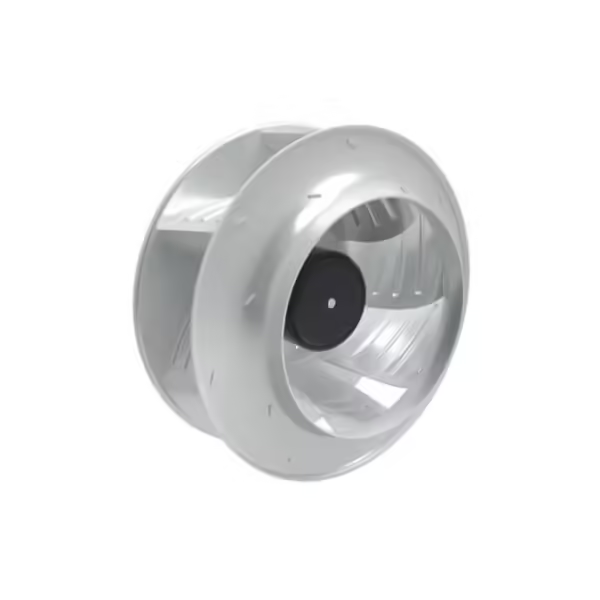
In modern industrial and commercial settings, noise pollution can be a major concern. A noise-reducing centrifugal fan is specifically engineered to minimize operational noise while maintaining high airflow efficiency and performance.
These fans are widely used in HVAC systems, data centers, laboratories, commercial buildings, and industrial plants where quiet operation is essential.
How Noise-Reducing Centrifugal Fans Work
Noise-reducing centrifugal fans achieve quieter operation through a combination of design innovations:
- Aerodynamic Blade Design – Optimizes airflow to reduce turbulence and vibration.
- Balanced Impellers – Minimize vibration at high RPMs.
- Acoustic Housing and Sound Insulation – Absorbs and dampens fan noise.
- Low-Noise Bearings and Motors – Engineered to operate smoothly under varying loads.
These features allow the fan to deliver efficient airflow without producing excessive noise, making them suitable for sensitive environments.
Key Noise-Reduction Technologies
- Backward-Curved Blades – Reduce turbulence and improve energy efficiency.
- Variable-Speed Drives (VSD) – Adjust fan speed to match system demand, reducing noise during low-load operation.
- Acoustic Lining – Inner housing materials that absorb sound.
- Vibration Isolation Mounts – Prevent fan vibrations from transmitting to building structures.
- Optimized Inlet/Outlet Design – Smooth transitions reduce air turbulence and associated noise.
Applications of Noise-Reducing Centrifugal Fans
Noise-reducing fans are ideal for environments where sound control is critical:
- Commercial HVAC Systems – Offices, hotels, hospitals, and retail spaces.
- Data Centers – Low-noise airflow for cooling sensitive electronic equipment.
- Laboratories and Cleanrooms – Maintain quiet, controlled airflow for precision processes.
- Industrial Facilities – Ventilation in areas requiring lower noise for worker comfort.
- Residential Applications – Quiet operation in apartments or small buildings.
- Recording Studios or Theaters – Ventilation without disturbing acoustics.
Performance Comparison: Standard vs Noise-Reducing Fans
| Feature | Standard Fan | Noise-Reducing Fan |
|---|---|---|
| Noise Level (dB) | Moderate-High | Low-Moderate |
| Airflow Efficiency | Moderate | High |
| Energy Consumption | Standard | Optimized |
| Vibration Control | Minimal | Advanced |
| Best Use Case | Industrial HVAC | Offices, labs, data centers, noise-sensitive spaces |
How to Select the Right Noise-Reducing Fan
- Required Airflow (CFM) and Pressure (Pa) – Match fan capacity to system needs.
- Noise Level Requirements (dB) – Choose a fan designed for acceptable noise limits.
- Motor and Bearing Type – Low-noise motors and precision bearings reduce sound.
- Blade Design – Backward-curved or aerodynamic blades optimize airflow and minimize noise.
- Acoustic Housing Options – Select fans with sound-absorbing housings if necessary.
- Installation Environment – Consider building materials and proximity to occupied spaces.
- Maintenance Accessibility – Ensure easy access for inspections and cleaning without disturbing performance.
Maintenance Tips for Noise-Reducing Fans
- Inspect and clean impellers regularly to prevent vibration-related noise.
- Lubricate bearings with low-friction, quiet-operating lubricants.
- Check vibration isolation mounts for wear or loosening.
- Monitor sound levels periodically to detect early issues.
- Maintain ductwork and filters to prevent turbulence-induced noise.
Case Studies and Applications
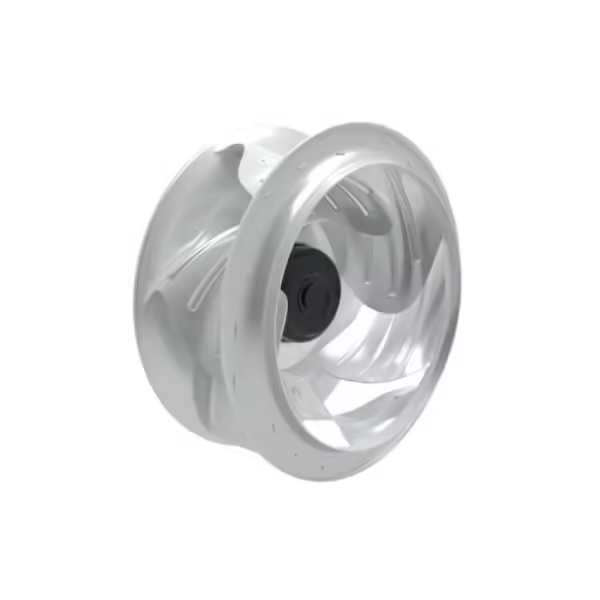
- Office Building Retrofit: Noise-reducing backward-curved fans lowered HVAC noise by 15 dB, improving occupant comfort.
- Data Center Cooling: Variable-speed fans reduced fan noise during low-load periods while maintaining airflow.
- Laboratory Ventilation: Acoustic-lined fans provided precise airflow without disturbing sensitive experiments.
FAQ
Q1: What is a noise-reducing centrifugal fan?
A: A fan engineered to minimize operational noise while maintaining airflow efficiency and performance.
Q2: Where are noise-reducing fans typically used?
A: Offices, hotels, hospitals, data centers, laboratories, cleanrooms, theaters, and residential buildings.
Q3: How do these fans reduce noise?
A: Through aerodynamic blades, balanced impellers, acoustic housings, vibration isolation, and variable-speed operation.
Q4: Can noise-reducing fans maintain high airflow?
A: Yes, they are designed to balance low noise with consistent, efficient airflow.
Q5: How should I maintain a noise-reducing fan?
A: Regular inspection, cleaning, lubrication, and checking vibration isolation mounts ensure long-term quiet operation.
Conclusion
A noise-reducing centrifugal fan is essential for environments where quiet operation is as important as airflow efficiency. By selecting the right fan, considering acoustic and aerodynamic design features, and maintaining it properly, operators can achieve efficient, reliable, and low-noise ventilation. These fans are perfect for offices, laboratories, data centers, and other noise-sensitive applications.