
Welcome to My Blog!
Before we dive into the content, if you’re interested in our products or have any questions, please feel free to visit our Contact Us page on the website. Our team is ready to assist you with inquiries, orders, or any support you may need.
Now, let’s get started on our journey together. I hope you find the content here insightful, engaging, and valuable.
Table of Contents
Introduction
Selecting a reliable water storage solution is crucial for homes, industries, commercial facilities, and public infrastructure. The growing demand for durable, hygienic, and cost-effective storage has led to the widespread adoption of several types of tanks, including stainless steel, enamel-coated, and fiberglass options. Among them, steel-based tanks have become a widely recognized choice thanks to their durability, hygiene standards, longevity, and adaptability to various environments.
This blog, titled Metal Water Tank Five Remarkable Reasons, explores why steel tanks continue to outperform many conventional water storage options. The five reasons covered in this article include strength, corrosion resistance, hygiene, design flexibility, long-term cost efficiency, and other practical aspects. To help readers better understand how this type of tank compares with other common tanks, a detailed table is included in the middle section.
The goal of this blog is to help homeowners, engineers, facility managers, construction planners, and procurement leaders understand the benefits, applications, and considerations when choosing a durable steel water tank. Beyond an overview, the article provides an in-depth exploration of structural characteristics, performance in different environments, maintenance requirements, and factors affecting total cost of ownership.
The content is designed to be informative, comprehensive, and neutral, with a strong focus on real-world applications. Whether you are selecting a tank for residential use, industrial water storage, food processing facilities, fire safety systems, or commercial buildings, this guide will help evaluate whether a steel-based tank is the right option for your needs.
Reason One – Strength and Durability
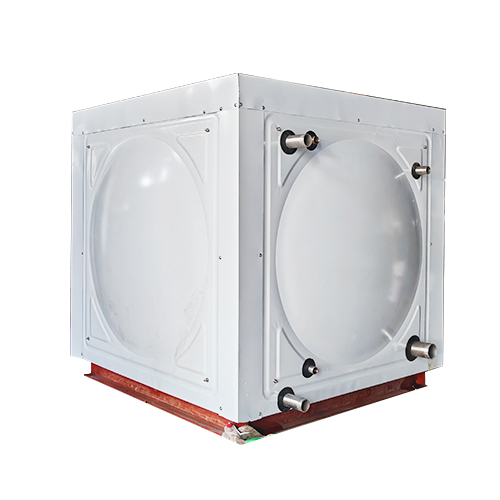
The structural strength of this type of water storage tank is one of its most notable advantages. Made from premium steel materials, including stainless steel or carbon steel options, it is engineered to withstand high internal pressure, external environmental conditions, and long-term use in both outdoor and indoor facilities.
How the metal water tank achieves superior load-bearing performance
This type of water storage unit is typically constructed using precision-welded steel plates. These plates are engineered for high tensile strength, enabling the tank to resist deformation caused by internal water load fluctuations. The material composition allows it to maintain structural integrity over decades, even under harsh environmental conditions.
The metal construction provides a natural advantage over other materials that may warp, crack, or weaken under mechanical stress. Fiberglass tanks, for example, may suffer from brittleness over time when exposed to UV radiation, while plastic tanks often deform under heat or pressure. A steel-built tank remains stable thanks to the inherent strength of its alloys.
Environmental resilience of the metal water tank
Environmental resilience refers to how well the tank performs under varying temperature conditions, moisture levels, and chemical exposures. This type of storage tank can withstand extreme climates, from hot desert regions to freezing mountainous areas. Its metal structure endures wide temperature swings without cracking, expanding excessively, or losing its shape.
Additionally, the unit offers excellent resistance to impact. In a commercial facility, construction site, or industrial area where accidental impacts may occur, it is far less vulnerable to damage than tanks made from plastic, fiberglass, or other lightweight materials. The rigid construction ensures reliable performance even in environments where heavy equipment or machinery is frequently used.
Long-term stability for industrial and commercial environments
Industrial environments often involve high levels of vibration, pressure shifts, and external mechanical forces. A metal water tank is designed to handle such environments with minimal maintenance. For example, metal water tanks installed in manufacturing plants or mining operations can operate for decades without showing signs of structural fatigue.
Furthermore, the modular design available in some metal water tank types allows for reinforcement where necessary. For high-rise buildings or water supply systems requiring elevated placement, the metal water tank’s strength ensures safe installation and stable long-term operation.
Reason Two – Health, Hygiene, and Water Quality Protection
Water quality preservation is one of the most important aspects of choosing a water tank. A metal water tank helps ensure the water remains clean, safe, and free from contaminants.
Smooth inner walls for better sanitation
One of the key features of a metal water tank is its smooth inner surface, which significantly reduces the chance of bacteria growth, sediment accumulation, or algae formation. The polished interior of stainless steel metal water tanks prevents scaling and makes cleaning easier.
Plastic or fiberglass tanks are more prone to surface roughness, microscopic porosity, or micro-cracks that can trap contaminants. A metal water tank avoids this risk because its structural surface is dense and non-porous.
Resistance to contamination
The metal water tank, especially those made with food-grade stainless steel, acts as a barrier against chemical contamination. Water stored in a metal water tank is protected from harmful leaching chemicals often found in some types of plastic tanks.
Additionally, a metal water tank is unaffected by sunlight penetration, meaning it prevents algae growth that is commonly found in translucent tanks.
Comparison Table – Metal Water Tank vs. Enamel Water Tank vs. Fiberglass Water Tank
| Feature | Metal Water Tank | Enamel Water Tank | Fiberglass Water Tank |
|---|---|---|---|
| Strength | Very High | High | Medium |
| Corrosion Resistance | Excellent | Very Good | Good |
| Hygiene Level | Excellent | Excellent | Good |
| Impact Resistance | Very High | High | Medium |
| Lifespan | 20–40 Years | 15–30 Years | 10–25 Years |
| Maintenance Needs | Low | Medium | Medium |
| Weight | Heavy | Medium | Light |
| Cost | Medium to High | Medium | Low to Medium |
| Thermal Stability | Excellent | Very Good | Good |
| Leakage Risk | Very Low | Low | Medium |
Reason Three – Corrosion Resistance and Material Advantages
The corrosion resistance of a metal water tank depends largely on the alloy composition used. Stainless steel metal water tanks are particularly known for their anti-corrosion performance.
Why stainless steel enhances the performance of the metal water tank
Stainless steel contains chromium, which forms a natural passive layer on the surface. This layer protects the steel from oxidation and corrosion. As a result, the metal water tank can store water of various pH levels without damage.
In regions with mineral-rich water or high salinity levels, the metal water tank performs significantly better compared to ordinary steel or plastic tanks. When installed outdoors, the tank resists rust even when exposed to humidity, rain, and air pollutants.
Resistance to chemical exposure
Chemical stability is critical in environments where the tank may be exposed to cleaning agents, industrial chemicals, or disinfectants. The metal water tank demonstrates outstanding resistance to acids, alkalis, and common industrial chemicals.
Compared to enamel tanks, which rely on the integrity of their glazed coating, the metal water tank is inherently more stable because its protection does not rely solely on a surface coating.
Thermal resistance and temperature adaptability
A metal water tank does not warp or soften under high temperatures. It also does not crack in freezing temperatures. This makes it suitable for fire protection systems, industrial processing, and cold-climate installations.
Reason Four – Design Flexibility and Customization
Another remarkable reason to choose a metal water tank is the extensive customization options available.
Modular configurations for different installation environments
A metal water tank can be manufactured in many shapes and sizes. It can be cylindrical, rectangular, square, underground, vertical, or horizontal. This flexibility allows architects and engineers to integrate it into almost any structural layout.
Adaptability to commercial, industrial, and domestic systems
Whether you need a small tank for home use or a large-scale reservoir for industrial machinery, the metal water tank can be tailored to meet your requirements. Its ability to be fabricated into large capacities makes it ideal for hotels, hospitals, factories, and water treatment plants.
Additional functional features
Depending on the intended use, the metal water tank can include insulation, heating systems, surface coatings, internal liners, multi-layer structures, or seismic reinforcements. These features make the metal water tank ideal for regions with strict safety standards or extreme climates.
Reason Five – Long-term Cost Efficiency and Low Maintenance
The initial cost of a metal water tank may be higher than some alternatives, but it offers substantial savings over time.
Reduced repair and maintenance costs
The metal water tank requires minimal maintenance. Its strong structure prevents leaks, cracks, and deformation. Stainless steel tanks need only occasional cleaning to maintain water hygiene.
Extended operational lifespan
A metal water tank can last up to 40 years with proper maintenance. This long lifespan significantly lowers replacement costs. Fiberglass tanks or plastic tanks often need replacement after around 10–20 years.
Lower operational costs
Because of its thermal stability, a metal water tank helps maintain water temperature, reducing energy costs for heating or cooling when used in industrial processes.
Conclusion
The metal water tank stands out as one of the most reliable water storage solutions available today. Its exceptional durability, outstanding hygiene performance, superior corrosion resistance, design versatility, and long-term cost advantages make it suitable for a wide variety of applications.
From residential water storage to industrial processing, hospitality facilities, and public infrastructure, the metal water tank delivers steady and dependable performance. When compared with enamel water tanks and fiberglass water tanks, the metal water tank often provides a better balance of structural strength, hygiene level, lifespan, and overall value.
FAQ
What is the expected lifespan of a metal water tank?
A high-quality steel water storage tank can last between 20 and 40 years, depending on the material grade, maintenance frequency, and environmental conditions.
Does a metal water tank require regular maintenance?
Maintenance is minimal. Periodic cleaning and inspection of fittings are usually sufficient to keep the tank in good working condition.
Can a metal water tank resist corrosion in coastal regions?
Stainless steel metal water tanks perform very well in coastal environments, especially when using higher-grade alloys with enhanced corrosion resistance.
What applications are best suited for a metal water tank?
It is ideal for residential buildings, commercial facilities, hospitals, hotels, factories, fire protection systems, and water treatment stations.
Need Help Choosing the Right Metal Water Tank?
If you’re unsure which water tank is best for your system or application, our experts are here to help. Contact us today for a personalized consultation, and ensure your ventilation system is efficient, reliable, and built to last. Don’t wait until inefficiencies or downtime affect your operations—get in touch now to optimize your airflow and protect your equipment!