
Table of Contents
Introduction
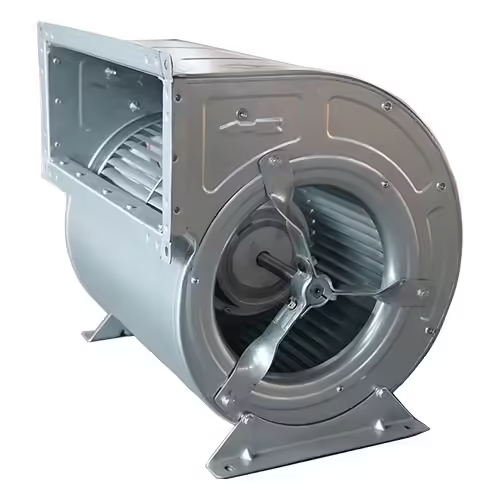
In many industrial, commercial, and HVAC applications, minimizing maintenance requirements is crucial for operational efficiency. A low-maintenance centrifugal fan is designed to reduce downtime, simplify upkeep, and deliver consistent airflow over long periods.
These fans are engineered with durable materials, precision components, and efficient designs, making them ideal for facilities where maintenance accessibility is limited or cost reduction is a priority.
How Low-Maintenance Centrifugal Fans Work
Low-maintenance centrifugal fans operate on the same principles as standard fans but are optimized to reduce the need for frequent service:
- Durable Bearings – High-quality bearings reduce wear and extend service intervals.
- Balanced Impellers – Precision balancing minimizes vibration, prolonging component life.
- Corrosion-Resistant Materials – Prevents damage from dust, moisture, or chemicals.
- Sealed Motors – Protect internal components from contaminants, reducing maintenance needs.
These features allow the fan to operate efficiently with minimal human intervention, reducing both labor and replacement costs.
Key Features of Low-Maintenance Centrifugal Fans
- Extended Service Intervals – Reduced frequency of inspection and lubrication.
- Durable Construction – Materials and design resist wear, corrosion, and high temperatures.
- Optimized Energy Efficiency – Reduced friction and improved airflow design.
- Quiet Operation – Balanced components reduce vibration and noise.
- Flexible Installation – Available in floor-mounted, wall-mounted, inline, or ducted configurations.
- Customizable Options – Impeller type, material, and speed control tailored to application needs.
Types of Low-Maintenance Centrifugal Fans
Forward-Curved Low-Maintenance Fans
Ideal for low-pressure systems where quiet, efficient airflow is required.
Backward-Curved Low-Maintenance Fans
Provide higher efficiency and longevity in industrial or commercial applications.
Radial Low-Maintenance Fans
Designed for high-pressure or particulate-laden air while minimizing maintenance requirements.
Inline Low-Maintenance Fans
Compact design for ducted systems, reducing maintenance access difficulties while ensuring airflow.
Comparison Table: Standard vs Low-Maintenance Centrifugal Fans
| Feature | Standard Fan | Low-Maintenance Centrifugal Fan |
|---|---|---|
| Maintenance Frequency | High | Low |
| Bearing Life | Medium | Long |
| Noise Level | Moderate | Lower due to balanced design |
| Material Durability | Standard | Corrosion-resistant, robust |
| Best Use Case | General | Remote, high-demand, long-term systems |
Applications of Low-Maintenance Centrifugal Fans
Low-maintenance centrifugal fans are suitable for a wide range of applications:
- Industrial Plants – Ventilation in areas with continuous operation.
- Commercial Buildings – Reduce maintenance in office, mall, and school HVAC systems.
- Data Centers – Ensure consistent airflow with minimal downtime.
- Laboratories – Maintain airflow in critical areas without frequent service.
- Agricultural Facilities – Ventilate barns, greenhouses, and processing areas efficiently.
- Dust Collection Systems – Handle dusty or contaminated air while reducing maintenance requirements.
- Remote or Hard-to-Access Locations – Reduce the need for frequent maintenance visits.
Selecting the Right Low-Maintenance Fan
When choosing a low-maintenance centrifugal fan, consider:
- Airflow Requirements (CFM) – Ensure fan meets system demand efficiently.
- System Pressure (Pa) – Match the fan to resistance in ducts or filters.
- Material Durability – Corrosion-resistant metals or coatings for harsh environments.
- Motor Type – Sealed or long-life motors reduce maintenance needs.
- Noise Requirements – Balance between airflow efficiency and quiet operation.
- Accessibility – Ensure installation allows for any required inspections or cleaning.
Maintenance Tips for Low-Maintenance Fans
Even low-maintenance fans require periodic checks:
- Inspect impellers and housings annually to ensure proper balance and no wear.
- Lubricate bearings if required by the manufacturer, usually at extended intervals.
- Check motors for overheating or abnormal vibrations.
- Clean dust or debris from intake and exhaust paths to maintain airflow efficiency.
- Schedule preventive inspections to avoid unexpected downtime.
Benefits of Working with a Manufacturer
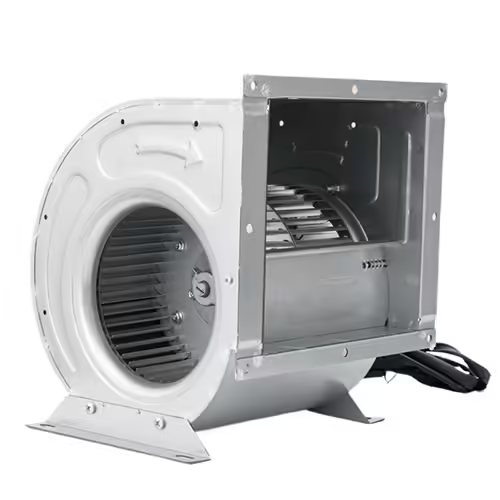
Partnering with a reliable fan manufacturer ensures:
- Fans are designed for extended service life with minimal maintenance.
- Guidance on selecting the best material, impeller type, and motor for your application.
- High-quality components tested for durability and efficiency.
- Support for installation, preventive maintenance planning, and troubleshooting.
Conclusion
A low-maintenance centrifugal fan is an excellent choice for facilities that require reliable airflow with minimal upkeep. By selecting the right fan, installing it correctly, and performing scheduled inspections, users can achieve long-term efficiency, reduced downtime, and consistent performance. Low-maintenance centrifugal fans are ideal for industrial, commercial, laboratory, agricultural, and remote applications where operational efficiency and reliability are critical.
FAQ
Q1: What is a low-maintenance centrifugal fan?
A: A fan engineered to reduce service frequency while providing consistent airflow and long-term reliability.
Q2: Where are low-maintenance fans commonly used?
A: Industrial plants, commercial HVAC systems, data centers, laboratories, agricultural facilities, and remote locations.
Q3: How do I choose the right low-maintenance fan?
A: Consider airflow, static pressure, material durability, motor type, and installation environment.
Q4: Are low-maintenance fans energy-efficient?
A: Yes, balanced designs and efficient components reduce energy loss.
Q5: How often should I inspect a low-maintenance fan?
A: Typically annually, or per manufacturer guidelines, since these fans are designed for extended intervals between maintenance.