
Table of Contents
Introduction
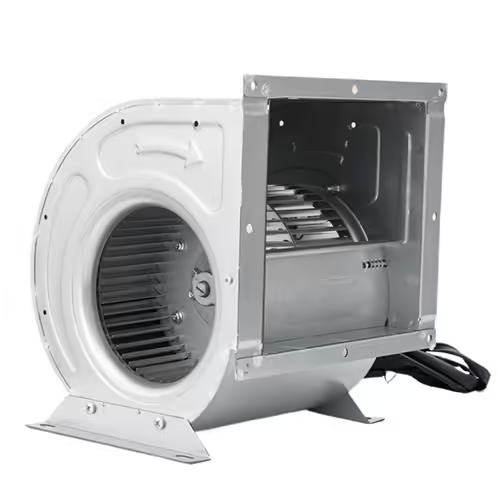
In modern ventilation and HVAC systems, space efficiency and streamlined airflow are key considerations. An inline centrifugal fan is designed to fit directly into ductwork, providing consistent airflow while occupying minimal space.
These fans are widely used in commercial buildings, industrial facilities, laboratories, and residential applications where efficient, inline ventilation is required.
How Inline Centrifugal Fans Work
Inline centrifugal fans operate on the same centrifugal principle as standard fans but are optimized for duct integration:
- Centrifugal Impellers – Move air efficiently through duct systems.
- Compact Housing – Designed to fit seamlessly into ducts without taking extra floor or wall space.
- Balanced Motors and Bearings – Ensure smooth, quiet operation.
- Optimized Airflow Paths – Reduce turbulence and pressure loss for efficient ventilation.
This design allows inline centrifugal fans to maintain steady airflow in both short and long duct runs.
Key Features of Inline Centrifugal Fans
- Compact and Space-Saving – Fits directly into ductwork or confined spaces.
- Consistent Airflow – Maintains performance across varying duct lengths and configurations.
- Durable Construction – Designed for continuous operation with minimal wear.
- Energy Efficiency – Optimized impeller and motor design reduce energy consumption.
- Quiet Operation – Balanced impellers and acoustic housing minimize noise.
- Flexible Installation – Suitable for horizontal or vertical duct runs.
- Customizable Options – Fan size, motor power, and airflow capacity tailored to system requirements.
Types of Inline Centrifugal Fans
Forward-Curved Inline Fans
Provide high airflow at low static pressure, ideal for general HVAC and residential ventilation.
Backward-Curved Inline Fans
Offer higher efficiency and energy savings in commercial and industrial applications.
Radial Inline Fans
Suitable for applications with particulate-laden or corrosive air.
Mixed-Flow Inline Fans
Combine characteristics of axial and centrifugal fans for moderate pressure and high airflow efficiency.
Comparison Table: Standard vs Inline Centrifugal Fans
| Feature | Standard Fan | Inline Centrifugal Fan |
|---|---|---|
| Installation Space | Floor/Wall | Inline with ductwork |
| Airflow (CFM) | Moderate | Moderate–High |
| Static Pressure (Pa) | Low–Medium | Medium |
| Noise Level (dB) | Moderate | Lower due to duct integration |
| Best Use Case | General ventilation | Confined spaces, ducted systems |
Applications of Inline Centrifugal Fans
Inline centrifugal fans are ideal for various applications:
- Commercial Buildings – Offices, malls, hotels, and restaurants with ducted HVAC.
- Industrial Facilities – Ventilation in workshops, factories, and warehouses.
- Laboratories – Controlled airflow for fume hoods or cleanrooms.
- Residential Ventilation – Bathrooms, kitchens, or attic ventilation.
- Data Centers – Inline fans integrated into cooling ducts for efficient airflow.
- Dust and Fume Extraction – Inline ventilation for small to medium extraction systems.
- Greenhouses – Consistent airflow through ducted ventilation systems.
Selecting the Right Inline Fan
Consider the following factors when choosing an centrifugal fan:
- Airflow Requirements (CFM) – Ensure the fan meets system demands.
- System Pressure (Pa) – Match the fan to duct resistance and filters.
- Fan Size and Duct Compatibility – Ensure seamless installation into existing ductwork.
- Motor Power and Efficiency – Adequate motor strength for continuous operation.
- Noise Considerations – Choose acoustic options if necessary.
- Maintenance Access – Plan for inspection or servicing in ducted installations.
Maintenance Tips for Inline Fans
- Inspect impellers and housing for dust accumulation or damage.
- Lubricate bearings if required, usually at extended intervals.
- Monitor motors for vibration or unusual noise.
- Ensure ducts remain clean to prevent airflow restriction.
- Schedule preventive maintenance to ensure long-term performance.
Benefits of Working with a Manufacturer
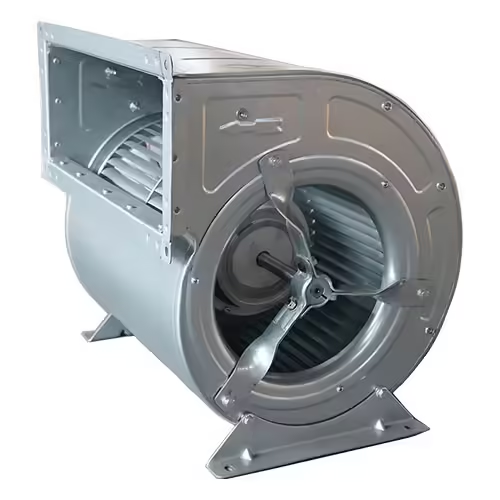
Partnering with a trusted fan manufacturer ensures:
- Fans are engineered for optimal inline performance and reliability.
- Guidance on airflow, pressure, and duct integration.
- Durable components and energy-efficient designs.
- Support for installation, calibration, and maintenance planning.
FAQ
Q1: What is an inline centrifugal fan?
A: A fan designed to fit directly into duct systems, providing efficient airflow in confined spaces.
Q2: Where are inline fans commonly used?
A: Commercial buildings, industrial facilities, laboratories, residential ventilation, data centers, and dust/fume extraction systems.
Q3: How do I select the right inline centrifugal fan?
A: Consider airflow, system pressure, duct size, motor power, noise, and installation requirements.
Q4: Can inline fans operate continuously?
A: Yes, they are designed for continuous operation in ducted systems.
Q5: How should I maintain an inline fan?
A: Regular inspections, cleaning ducts, checking impellers and bearings, and preventive maintenance ensure long-term efficiency.
Conclusion
An inline centrifugal fan is a versatile solution for ducted ventilation systems, combining efficiency, compact design, and reliable performance. By selecting the right fan, installing it properly, and maintaining it regularly, you can achieve optimal airflow, reduced noise, and long-term reliability. Inline centrifugal fans are ideal for commercial, industrial, residential, and laboratory applications where space-saving duct integration is essential.