
Table of Contents
Introduction
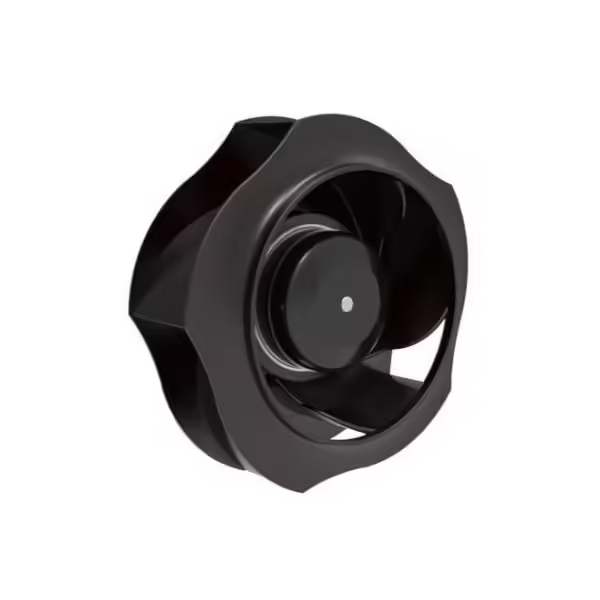
Centrifugal fans are critical components in modern industrial systems. Unlike axial fans, which move air along the axis of the fan, centrifugal fans draw air into the center of the fan and expel it radially, providing higher pressure and controlled airflow. Their design allows them to handle large volumes of air while maintaining efficiency in various applications.
As a manufacturer of industrial centrifugal fans, we understand the importance of selecting the right fan for specific applications. Whether it is for HVAC systems, dust collection, or high-temperature environments, centrifugal fans play a vital role in ensuring smooth operations and energy efficiency.
Common Industrial Applications of Centrifugal Fans
Centrifugal fans are versatile and widely used across multiple industries. Some of the most common applications include:
- HVAC Systems: Centrifugal fans provide consistent airflow in heating, ventilation, and air conditioning systems, ensuring optimal indoor air quality and comfort.
- Dust Collection and Pollution Control: In factories and processing plants, centrifugal fans are essential for dust extraction, maintaining clean and safe working environments.
- Chemical and Pharmaceutical Plants: Resistant to corrosive and hazardous gases, centrifugal fans help control airflow in sensitive processes.
- Food Processing and Clean Rooms: These fans ensure controlled ventilation and hygiene compliance in food and pharmaceutical production.
- Power Plants and Boiler Systems: High-pressure centrifugal fans are used to manage combustion air and exhaust gases efficiently.
High-Pressure and High-Temperature Centrifugal Fan Applications
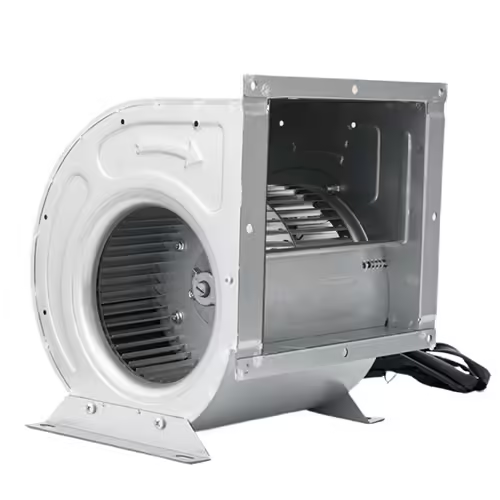
Certain industrial applications demand fans that can withstand extreme conditions. High-pressure centrifugal fans are designed for operations requiring strong airflow against resistance, such as in boilers and kilns. High-temperature fans, often made from stainless steel or corrosion-resistant alloys, ensure reliable performance in harsh environments. Explosion-proof fans are specifically engineered for environments with combustible gases or dust, ensuring safety and compliance with industry standards.
Centrifugal Fan Applications by Industry
Centrifugal fans are tailored to meet the requirements of specific industries:
- Mining and Material Handling: Provides ventilation in underground tunnels and dust extraction in processing plants.
- Cement and Construction: Used for kiln ventilation, dust extraction, and material handling.
- Wastewater Treatment: Assists in aeration and exhaust in treatment plants.
- Electronics Manufacturing and Laboratories: Ensures controlled airflow and temperature regulation in sensitive environments.
How to Choose the Right Centrifugal Fan for Your Application
Selecting the correct centrifugal fan requires careful consideration of several factors:
- Airflow and Pressure Requirements: Evaluate the volume of air and resistance in your system to determine fan capacity.
- Material and Corrosion Resistance: For chemical or high-humidity applications, choose materials like stainless steel or coated alloys.
- Size, Speed, and Power: Ensure the fan matches the system’s physical constraints and energy efficiency goals.
- Fan Type: Backward curved fans are energy-efficient and suitable for high-pressure systems, while forward curved fans are ideal for low-pressure, high-volume applications.
| Application | Recommended Fan Type | Key Feature |
|---|---|---|
| HVAC Systems | Forward Curved Centrifugal Fan | Quiet operation, high volume airflow |
| Dust Collection | Backward Curved Centrifugal Fan | High efficiency, robust construction |
| Chemical Plants | High-Temperature / Corrosion-Resistant Fan | Resistant to chemicals and heat |
| Power Plants | High-Pressure Centrifugal Fan | Maintains strong airflow under resistance |
| Food Processing | Stainless Steel Centrifugal Fan | Hygienic, easy to clean |
Advantages of Using Centrifugal Fans in Industrial Applications
Choosing the right centrifugal fan offers multiple benefits:
- Energy Efficiency: Properly selected fans reduce energy consumption while maintaining airflow.
- Enhanced Ventilation Control: Regulates airflow precisely, critical in clean rooms and production facilities.
- Reduced Maintenance Requirements: High-quality fans are built for durability, minimizing downtime.
- Long Lifespan: Industrial-grade centrifugal fans handle harsh environments without compromising performance.
- Supporting Sustainability: Efficient fans reduce carbon footprint and operational costs.
Common Challenges and Solutions in Centrifugal Fan Applications
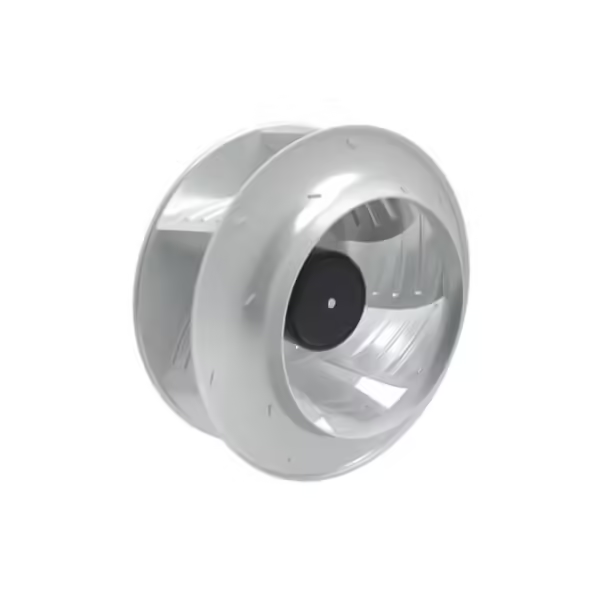
Even high-quality fans can face operational challenges:
- Noise and Vibration: Use vibration dampeners and balanced blades to minimize disturbances.
- Dust and Particle Handling: Implement pre-filters or dust collection systems to protect fans.
- High-Temperature Airflows: Use fans made from heat-resistant materials for longevity.
- Maintenance: Regular inspection and lubrication ensure optimal performance.
- Compliance: Ensure fans meet local industrial and safety standards.
Latest Innovations and Trends in Centrifugal Fan Applications
Centrifugal fans continue to evolve with technological advancements:
- Variable Speed Fans: Adjust airflow dynamically to improve energy efficiency.
- Smart Monitoring Systems: Real-time data on airflow, vibration, and temperature for predictive maintenance.
- Corrosion-Resistant Materials: Stainless steel or coated alloys extend fan lifespan in harsh environments.
- Customized Solutions: Tailored fans designed for unique industrial processes, from chemical plants to food production lines.
How a Manufacturer Supports Your Centrifugal Fan Applications
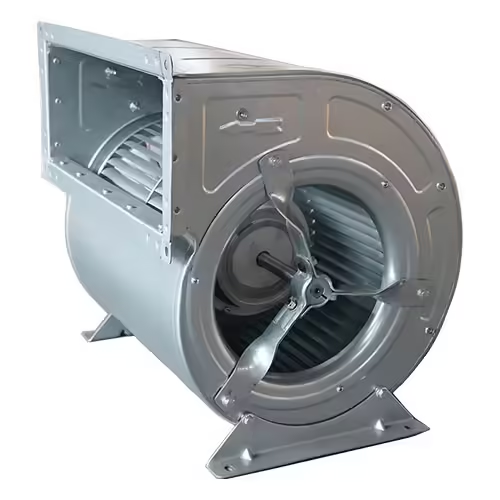
As a manufacturer, we provide more than just fans. Our services include:
- Custom Design Solutions: Fans tailored to your specific industrial requirements.
- Quality Assurance: Every fan undergoes rigorous testing to meet international standards.
- Technical Support: Expert consultation to help select, install, and maintain the right fan.
- Long-Term Reliability: Durable fans and responsive after-sales service ensure continuous operation.
Conclusion
Centrifugal fans are indispensable in modern industrial systems, offering efficient airflow control across a wide range of applications. From HVAC systems to chemical plants, dust collection systems, and high-temperature environments, the right fan ensures performance, energy efficiency, and operational safety.
Choosing the correct centrifugal fan requires careful consideration of airflow, pressure, material, and environmental conditions. Partnering with a manufacturer provides access to custom solutions, expert guidance, and long-lasting reliability. For industrial operations seeking efficiency and precision, centrifugal fans remain a critical investment.
FAQ
Q1: What are centrifugal fan applications?
A: Centrifugal fan applications refer to the various industrial and commercial uses of centrifugal fans, including HVAC systems, dust collection, chemical plants, food processing, and high-pressure airflow environments.
Q2: How do I choose the right centrifugal fan for my application?
A: Consider factors such as airflow requirements, pressure, material compatibility, fan type (backward or forward curved), and the operating environment to select the ideal centrifugal fan for your specific application.
Q3: Can centrifugal fans be used in high-temperature or corrosive environments?
A: Yes. High-temperature centrifugal fans and corrosion-resistant fans are designed for extreme industrial conditions, such as chemical plants, boiler systems, and dust collection applications.
Q4: What industries commonly use centrifugal fans?
A: Centrifugal fans are widely used in HVAC, mining, power plants, cement and construction, food processing, pharmaceutical production, and wastewater treatment facilities.
Q5: What are the benefits of using centrifugal fans in industrial applications?
A: Benefits include energy efficiency, precise airflow control, reduced maintenance, long service life, and improved safety in harsh or high-pressure environments.