
Table of Contents
Modern industrial facilities require stable airflow, reliable pressure, and long-term operating efficiency. In many production environments, specialized air-handling equipment plays a vital role in ventilation, material handling, and process control. As a professional industrial air movement equipment manufacturer, we design and produce high-performance solutions for a wide range of industrial systems.
This article provides a practical overview of industrial blower technology, including design principles, common configurations, application scenarios, and key considerations for buyers looking to source reliable airflow equipment.
What Is a Centrifugal Blower?
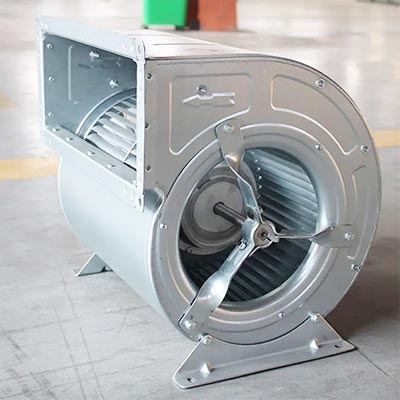
This type of industrial air-moving equipment uses rotational force to draw air into the system and discharge it outward through a specially designed housing. By redirecting airflow at a right angle, the system is able to generate higher pressure compared with traditional axial designs.
Basic Definition and Working Principle
Air enters through the inlet, accelerates as it passes through the rotating impeller, and exits the casing with increased velocity and pressure. This operating principle makes the equipment suitable for installations where duct resistance, filtration, or long conveying distances are involved.
Differences Between Blowers and Conventional Fans
Compared with standard fans, industrial blower systems are better suited for applications that require consistent airflow under pressure rather than simply moving large air volumes in open spaces.
Key Advantages of Industrial Airflow Equipment
Well-designed industrial blower units offer several operational benefits:
- Stable pressure output under varying system loads
- Strong adaptability to complex duct systems
- Durable construction for continuous-duty operation
- Flexible configuration options for different industries
- Reduced maintenance requirements when properly specified
These advantages make such systems a preferred choice in demanding industrial environments.
Common Types of Industrial Blower Designs
Different system requirements call for different impeller and housing configurations.
Forward Curved Designs
Compact and cost-effective, these units are commonly used in clean-air environments such as commercial HVAC and light industrial ventilation.
Backward Curved Designs
Known for higher efficiency and lower operating noise, this configuration is widely used in production facilities and process ventilation systems.
Radial Blade Designs
With an open impeller structure, radial blade units perform well in applications involving dust, particles, or elevated temperatures.
Single Inlet and Double Inlet Configurations
Single inlet designs focus on space efficiency, while double inlet systems provide increased airflow capacity at lower rotational speeds.
Core Design Elements and Components
A reliable industrial air-handling system is built around several key components:
- Impeller geometry optimized for airflow and pressure
- Electric motor and drive system matched to operating conditions
- Rigid casing structure to maintain airflow stability
- Bearing and shaft assemblies designed for long service life
- Optional noise and vibration control features
Material selection is also critical, especially in corrosive or high-temperature environments.
Industrial Applications and Use Cases
These airflow systems are widely applied across multiple sectors:
- Dust collection and filtration installations
- Cement, steel, and power generation facilities
- Building ventilation and process exhaust systems
- Chemical processing and wastewater treatment plants
- Pneumatic conveying and industrial drying lines
Typical Application Overview
| Industry | Operating Requirement | Suggested Design |
|---|---|---|
| Dust Control | High resistance handling | Backward curved |
| Building Ventilation | Quiet operation | Forward curved |
| Heavy Industry | Abrasion resistance | Radial blade |
| Water Treatment | Corrosion protection | Stainless steel |
| Material Conveying | Stable pressure | High-pressure design |
How to Select the Right Airflow Solution
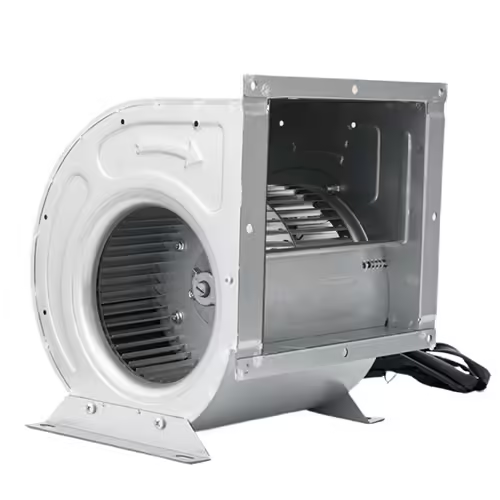
Choosing the correct equipment requires careful evaluation of system conditions.
Key considerations include required airflow volume, operating pressure, installation environment, acceptable noise levels, and energy efficiency goals. Accurate data allows manufacturers to recommend solutions that balance performance with operating cost.
Understanding Performance Characteristics
Performance curves illustrate how airflow, pressure, and power consumption interact under different operating conditions. Reviewing these curves helps engineers avoid inefficient operating points and ensures long-term system stability.
Proper selection based on these characteristics can significantly improve reliability and energy efficiency.
High-Pressure and Customized Solutions
Certain industrial processes require enhanced pressure capability or special construction features. In such cases, customized airflow systems provide better integration with existing installations.
Available options may include explosion-resistant designs, corrosion-resistant materials, or fully customized OEM solutions developed to meet specific project requirements.
Why Work with a Direct Manufacturer
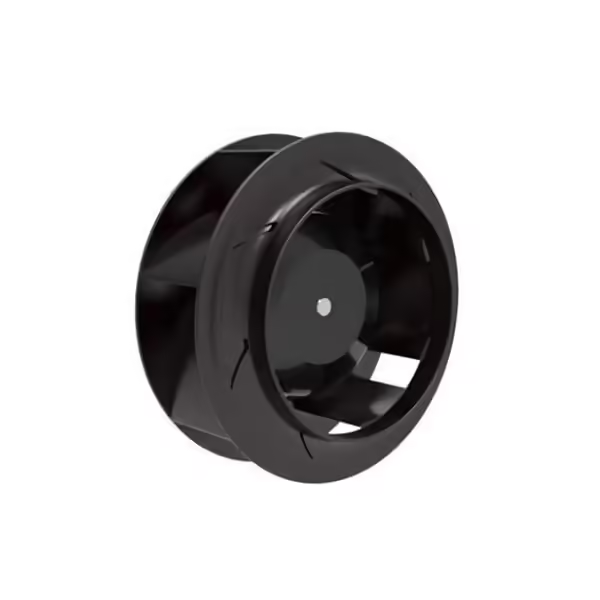
Sourcing equipment directly from a manufacturer offers clear advantages:
- Integrated design and production control
- Consistent quality assurance and testing
- Flexible customization options
- Shorter communication chains and technical support
- Experience with international industrial standards
Working closely with a manufacturer helps ensure the final solution meets both performance and compliance requirements.
Operation, Maintenance, and Reliability
Routine inspection and maintenance play a key role in system longevity. Monitoring vibration, cleaning internal components, and maintaining proper alignment can prevent common operational issues and reduce unplanned downtime.
Buying Considerations for Industrial Projects
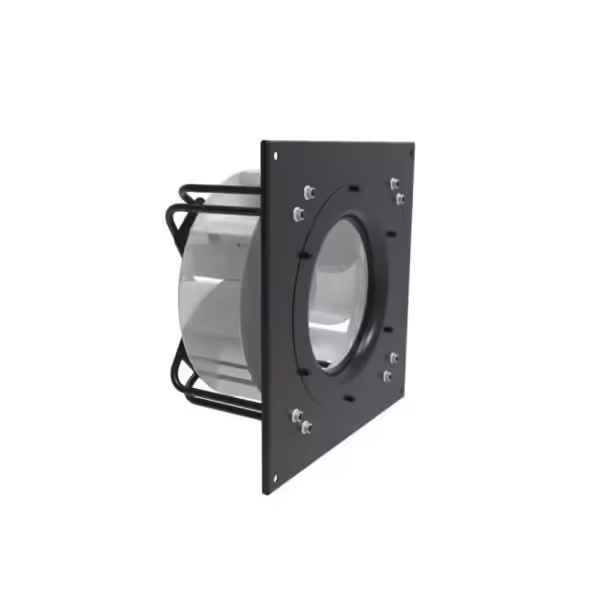
Before requesting a quotation, project teams should prepare basic operating parameters, environmental conditions, and any special certification requirements. Clear specifications allow suppliers to provide accurate recommendations and pricing.
Conclusion
Reliable industrial airflow systems are essential for efficient and safe plant operation. Selecting the right equipment design—and partnering with an experienced manufacturer—helps ensure stable performance, reduced operating costs, and long service life.
Whether your project requires a standard solution or a fully customized design, our engineering team is ready to support your application with professional manufacturing expertise and technical guidance.
Contact us today to discuss your project requirements and receive a tailored industrial airflow solution.
Frequently Asked Questions
What is the main purpose of a centrifugal blower?
A centrifugal blower is used to move air or gas at higher pressure, making it suitable for systems with duct resistance, filters, or long conveying distances.
How do I choose the right centrifugal blower for my application?
Key factors include required airflow, operating pressure, system resistance, environmental conditions, and noise or energy efficiency requirements.
What industries commonly use centrifugal blowers?
They are widely used in dust collection, HVAC systems, power plants, chemical processing, wastewater treatment, and material conveying applications.
What is the difference between a centrifugal blower and an axial fan?
Centrifugal blowers generate higher pressure and are better suited for industrial systems, while axial fans are mainly used for high-volume, low-pressure ventilation.
Can centrifugal blowers be customized for specific industrial needs?
Yes. Manufacturers can provide custom designs based on airflow requirements, materials, operating conditions, and installation constraints.
Need Help Choosing the Right Centrifugal Blower?
If you’re unsure which centrifugal blower best fits your industrial application, our experienced engineers are here to help. Contact us today for a personalized consultation and receive a reliable, efficient airflow solution tailored to your system requirements. Don’t compromise on performance—get in touch now and keep your industrial operations running smoothly and safely.