
Table of Contents
Industrial and commercial facilities require reliable air handling solutions to maintain stable indoor conditions. In large-scale environments, standard HVAC equipment is often insufficient to manage airflow, temperature, and air quality.
This guide explains how industrial air handling systems work, where they are applied, and how to select the right solution directly from a professional manufacturer.
What Is an Industrial Air Handler Unit?
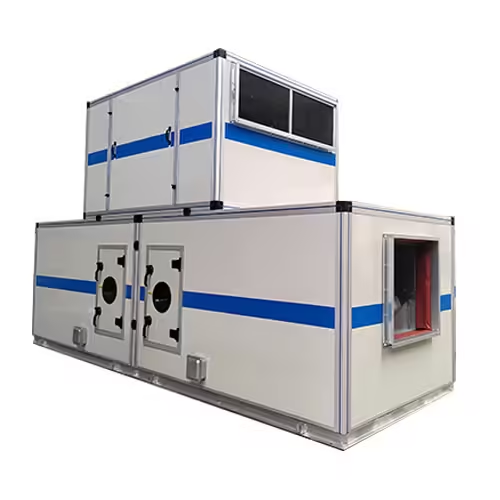
An industrial air handler unit is a core component of large HVAC systems, designed to circulate and condition air in demanding environments. These systems manage air movement, filtration, heating, cooling, and humidity control to support stable indoor conditions.
Compared with residential or light commercial equipment, industrial-grade air handling solutions are engineered for higher capacity, longer operating hours, and more complex installation requirements.
How Does an Industrial Air Handler Unit Work?
Air handling systems operate by drawing air from indoor or outdoor sources, processing it through multiple stages, and redistributing it throughout the facility.
The process typically includes air intake, filtration, temperature adjustment through heating or cooling coils, and controlled air distribution. Optional functions such as humidification, dehumidification, or heat recovery can be integrated depending on project needs.
Modern control systems allow precise monitoring and adjustment to ensure efficient and stable operation.
Key Components of an Industrial Air Handling System
A complete air handling solution consists of several critical components working together:
- Fans and motors to deliver consistent airflow
- Heating and cooling coils for temperature regulation
- Filtration systems to improve air quality and protect equipment
- Casing and insulation to enhance durability and reduce energy loss
The overall performance depends heavily on engineering design, material selection, and manufacturing quality.
Industrial Air Handling Systems vs Standard HVAC Equipment
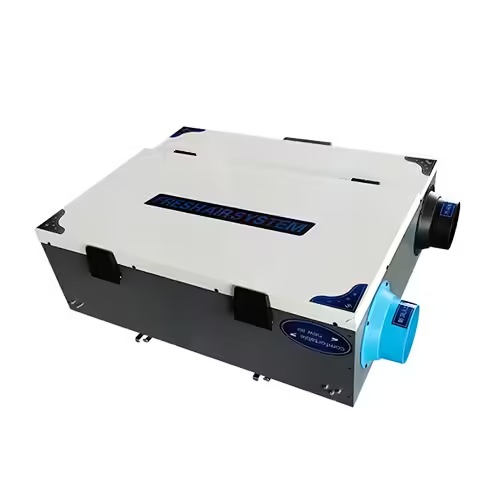
For large facilities, industrial air handling systems offer clear advantages over standard HVAC units.
| Feature | Industrial Air Handling System | Standard HVAC Equipment |
|---|---|---|
| Airflow Capacity | High and configurable | Limited |
| Operating Conditions | Continuous, heavy-duty | Intermittent |
| System Design | Project-specific | Fixed |
| Durability | Built for harsh environments | Moderate |
| Typical Use | Industrial & large facilities | Offices & small buildings |
These differences make industrial systems more suitable for complex and high-demand applications.
Applications Across Industrial and Commercial Sectors
Industrial air handling solutions are widely used in:
- Manufacturing plants and production facilities
- Pharmaceutical and cleanroom environments
- Food and beverage processing plants
- Warehouses, hospitals, and data centers
Each industry has unique requirements for airflow, filtration level, and environmental control, which is why customized system design is often preferred.
How to Select the Right Air Handling Solution
Choosing the right system starts with understanding your facility’s requirements. Important factors include required air volume, temperature control needs, energy efficiency targets, and compliance with industry standards.
Space limitations, installation conditions, and future expansion plans should also be considered. Working with an experienced manufacturer helps ensure the system is properly engineered for long-term performance and cost efficiency.
Custom Air Handling Solutions from a Direct Manufacturer
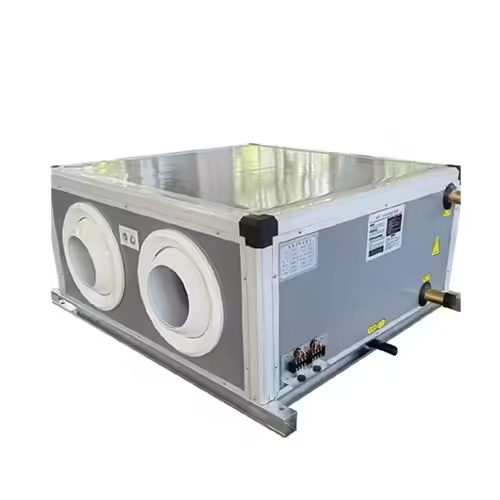
As a direct manufacturer, we specialize in providing custom air handling solutions tailored to specific project requirements. Customization allows flexibility in airflow design, filtration configuration, materials, and control systems.
By working directly with a manufacturer, customers benefit from engineering support, consistent quality control, and solutions designed to match real operating conditions rather than generic specifications.
Energy Efficiency and Performance Optimization
Energy efficiency plays an increasingly important role in industrial HVAC projects. High-efficiency fans, optimized airflow design, heat recovery systems, and intelligent controls can significantly reduce operating costs.
Well-designed air handling systems not only improve indoor conditions but also contribute to lower energy consumption and more sustainable facility operation.
Installation, Maintenance, and Long-Term Service
Correct installation and regular maintenance are essential for reliable operation. Routine inspections, filter replacement, and system cleaning help maintain airflow performance and extend service life.
Manufacturers that provide technical guidance and after-sales support help ensure smooth operation throughout the entire lifecycle of the system.
Why Work with Us as Your Manufacturing Partner
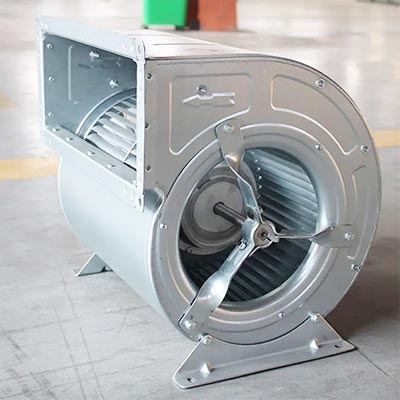
We design and manufacture air handling solutions for a wide range of industrial and commercial projects worldwide. Our approach focuses on engineering reliability, flexible customization, and consistent production quality.
With direct factory support, experienced technical teams, and project-based manufacturing capabilities, we help customers achieve stable performance and long-term value.
Conclusion
Air handling systems are essential for maintaining controlled indoor environments in large-scale facilities. Selecting the right solution—and the right manufacturing partner—has a direct impact on system efficiency, reliability, and operating costs.
As an experienced manufacturer, we provide engineered air handling solutions designed to meet the specific demands of industrial and commercial applications. Whether for a new installation or system upgrade, our team is ready to support your project from concept to delivery.
Contact us to discuss your requirements and receive a customized air handling solution.
FAQ
What is an industrial air handler unit used for?
It is used to circulate, filter, heat, and cool air in large industrial and commercial facilities, helping maintain stable indoor air quality and environmental control.
How is an industrial air handler unit different from standard HVAC equipment?
Industrial units are designed for higher airflow capacity, continuous operation, and harsh environments, while standard HVAC equipment is intended for smaller and less demanding applications.
Can industrial air handler units be customized for specific projects?
Yes. Many manufacturers offer custom-built solutions to match specific airflow, filtration, material, and control requirements for different industries.
What industries commonly use industrial air handler units?
They are widely used in manufacturing plants, pharmaceutical facilities, food processing plants, cleanrooms, hospitals, and data centers.
How do I choose the right industrial air handler unit for my facility?
Key factors include required airflow, temperature control needs, energy efficiency targets, industry compliance, and installation conditions. Working with a direct manufacturer helps ensure proper system design.
Need Help Choosing the Right Industrial Air Handler Unit?
If you’re unsure which air handling solution is best for your facility or project, our experts are here to help. Contact us today for a personalized consultation, and get a high-performance industrial air handler unit designed to meet your specific requirements. Don’t compromise on air quality and system efficiency—get in touch now and let us support your project from design to delivery.