
Table of Contents
Introduction
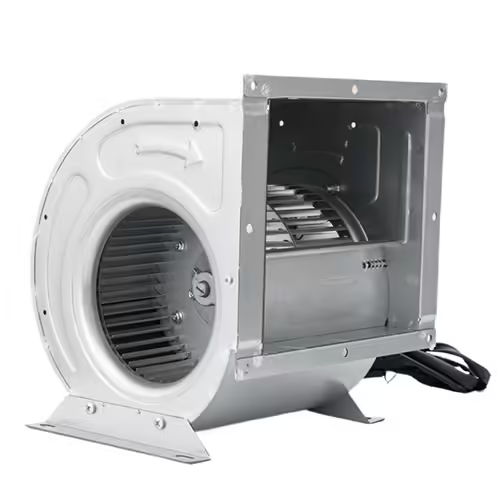
In modern ventilation systems, flexibility and adaptability are key. A customizable centrifugal fan allows engineers and facility managers to tailor airflow, pressure, size, and materials to meet the unique requirements of their application. These fans are widely used in industrial plants, laboratories, commercial buildings, residential complexes, and specialized HVAC systems.
By selecting a customizable centrifugal fan, users gain the ability to optimize performance, reduce operational costs, and ensure the fan integrates seamlessly with existing systems.
How Customizable Centrifugal Fans Work
Customizable centrifugal fans operate on the same principles as standard fans but are designed for flexibility:
- Adjustable Impellers – Can be modified for specific airflow rates and static pressure.
- Flexible Housing Designs – Accommodate installation constraints and system layouts.
- Motor and Speed Options – Allow users to choose optimal power and RPM for their needs.
- Material Selection – Fans can be built from steel, stainless steel, aluminum, or coated metals depending on environmental conditions.
This adaptability ensures that customizable fans meet both performance and design requirements, making them suitable for diverse and demanding applications.
Key Features of Customizable Centrifugal Fans
- Tailored Airflow and Pressure – Match the fan to system requirements precisely.
- Multiple Design Options – Forward-curved, backward-curved, radial, or inline configurations.
- Durable Construction – Materials selected for longevity in specific environments.
- Noise Control Options – Fans can be optimized for low-noise operation if needed.
- Easy Maintenance Access – Designed for serviceability without compromising performance.
- Scalable Sizes – From compact units to large industrial fans.
Types of Customizable Centrifugal Fans
Forward-Curved Customizable Fans
Suitable for low-pressure systems where quiet operation and flexibility are critical.
Backward-Curved Customizable Fans
Provide higher efficiency and adjustable airflow for industrial and commercial applications.
Radial Customizable Fans
Designed for handling particulate-laden air and high-pressure applications.
Inline Customizable Fans
Compact and adaptable for ducted systems, allowing modifications in airflow and pressure.
Comparison Table: Standard vs Customizable Centrifugal Fans
| Feature | Standard Fan | Customizable Centrifugal Fan |
|---|---|---|
| Airflow Flexibility | Low | High |
| Static Pressure Options | Limited | Adjustable |
| Material Selection | Standard | Wide variety |
| Noise Control | Fixed | Optimizable |
| Maintenance Accessibility | Moderate | Easy |
| Best Use Case | General | Specialized / Tailored |
Applications of Customizable Centrifugal Fans
Customizable centrifugal fans are versatile and widely used:
- Industrial Plants – Adjust fans to specific processes, chemical exposure, or airflow needs.
- Laboratories and Cleanrooms – Precisely control airflow, pressure, and filtration.
- Commercial HVAC Systems – Tailor ventilation for large buildings, malls, and offices.
- Residential Complexes – Integrate fans with custom duct layouts for apartments and homes.
- Data Centers – Customize airflow for optimal cooling and energy efficiency.
- Agricultural and Food Processing – Select materials and airflow designs to meet hygiene and durability requirements.
- Specialty Applications – Dust collection, smoke removal, or corrosive environments.
Selecting the Right Customizable Fan
Consider these factors when choosing a customizable fan:
- Required Airflow (CFM) and Pressure (Pa) – Ensure the fan can meet system demands.
- Environmental Conditions – Material selection must resist corrosion, heat, or particulate exposure.
- Noise Requirements – Determine whether low-noise operation is essential.
- Installation Space – Consider footprint, duct integration, and accessibility.
- Adjustability Needs – Confirm the fan can be customized for future changes in airflow or pressure.
- Maintenance Access – Easy access for cleaning, lubrication, and inspection.
Maintenance Tips for Customizable Fans
Proper maintenance ensures long-term performance:
- Inspect impellers and housings regularly for wear or corrosion.
- Lubricate motors and bearings according to manufacturer recommendations.
- Check airflow and vibration to detect early issues.
- Replace worn or adjustable components promptly to maintain performance.
- Maintain a preventive schedule, especially for fans in heavy-duty or critical applications.
Benefits of Working with a Manufacturer
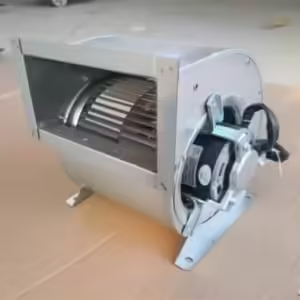
Partnering with a reputable fan manufacturer ensures:
- Fans are engineered to precise specifications for your application.
- Guidance on airflow, pressure, and material selection.
- High-quality components tested for durability and efficiency.
- Support for installation, customization, and maintenance.
Conclusion
A customizable centrifugal fan offers unmatched flexibility, allowing facilities to meet unique ventilation requirements. By selecting the right fan, integrating it correctly, and maintaining it regularly, users can achieve optimal airflow, efficiency, and reliability. Customizable centrifugal fans are ideal for industrial, commercial, residential, and specialty applications, providing performance, adaptability, and peace of mind.
FAQ
Q1: What is a customizable centrifugal fan?
A: A fan designed to be tailored in airflow, pressure, size, material, and noise control for specific applications.
Q2: Where are customizable fans commonly used?
A: Industrial plants, laboratories, commercial HVAC systems, residential complexes, data centers, and specialty environments.
Q3: How do I select the right customizable fan?
A: Consider airflow, pressure, environmental conditions, noise levels, installation space, and adjustability requirements.
Q4: Can customizable fans handle high-demand applications?
A: Yes, they are designed to be adapted for both high-volume and high-pressure environments.
Q5: How should I maintain a customizable centrifugal fan?
A: Regular inspections, cleaning, lubrication, and preventive maintenance ensure optimal performance and long lifespan.