
Table of Contents
Introduction
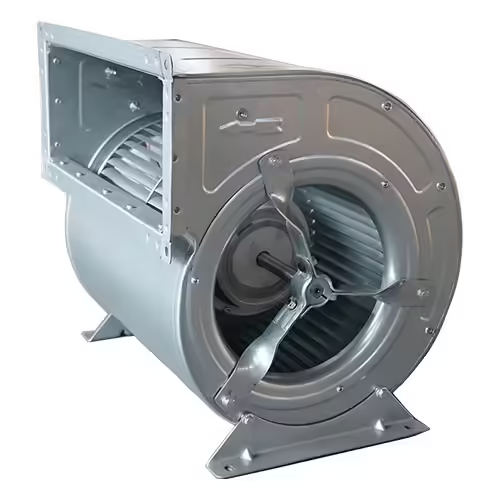
A corrosion-resistant centrifugal fan is essential for environments where moisture, chemicals, and corrosive gases can quickly damage standard ventilation equipment. Designed with specialized materials and protective coatings, this type of fan delivers reliable airflow while maintaining durability in harsh industrial and commercial environments.
As a direct manufacturer, producing high-quality centrifugal fans allows us to help customers strengthen system performance, reduce downtime, and achieve long-term cost efficiency.
Why Corrosion Resistance Matters in Ventilation Systems
Corrosion drastically reduces fan lifespan. It weakens components, increases vibration, and leads to unexpected failures. In facilities where the air contains chemical fumes, salt particles, abrasive dust, or acidic moisture, having a corrosion-resistant fan is not optional—it’s essential.
Common corrosion sources include:
- Chemical processing emissions
- Humid coastal air
- Acidic or alkaline fumes
- Wastewater treatment gases
- Salt spray in marine environments
A corrosion-resistant model prevents structural damage and maintains airflow stability.
Core Materials Used in Corrosion-Resistant Centrifugal Fans
To ensure long-term protection, these fans are built using specialized materials. Below are some commonly used options:
| Material Type | Corrosion Resistance Level | Typical Applications |
|---|---|---|
| Stainless Steel (304/316) | High | Food processing, marine ventilation |
| FRP (Fiberglass Reinforced Plastic) | Very High | Chemical plants, waste treatment |
| PVC/PP Plastics | Medium-High | Cleanrooms, lab ventilation |
| Coated Carbon Steel | Medium | Industrial air handling |
| Aluminum Alloy | Medium | General ventilation with mild corrosion |
Each material suits different environments, and selecting the right one ensures the best balance of performance and cost.
Key Engineering Features of Corrosion-Resistant Fans
To withstand corrosive environments, these fans incorporate multiple protective engineering elements:
Anti-Corrosion Coatings
Epoxy, polyurethane, and fluoropolymer coatings protect internal and external surfaces from chemical attack.
Sealed Bearings
Prevent moisture and chemicals from entering the motor assembly.
High-Strength Impellers
Impellers designed from stainless steel, FRP, or coated metals reduce deformation under harsh airflow conditions.
Acid- and Alkali-Resistant Fasteners
Bolts, nuts, and brackets are made from corrosion-proof metals to prevent structural failure.
Smooth Interior Surfaces
Reduce the accumulation of corrosive residue and improve airflow efficiency.
Industry Applications for Corrosion-Resistant Centrifugal Fans
Corrosion-resistant fans are widely used in industries where standard fans fail quickly due to chemical exposure or humidity:
- Chemical Processing Plants
Handling exhaust with acidic or alkaline fumes. - Wastewater Treatment Facilities
Managing hydrogen sulfide (H₂S) and other corrosive gases. - Marine and Coastal Buildings
Preventing salt-induced erosion. - Battery Manufacturing
Handling corrosive particulates and fumes. - Pharmaceutical and Laboratory Ventilation
Requiring clean, corrosion-safe airflow. - Food Processing Environments
Resist moisture and sanitation chemicals.
Performance Benefits You Can Expect
A corrosion-resistant centrifugal fan offers several operational advantages:
- Longer service life
- Better performance stability
- Reduced maintenance downtime
- Lower total ownership cost
- Enhanced safety in harsh environments
- Stable airflow even with corrosive gas exposure
How to Choose the Right Corrosion-Resistant Centrifugal Fan
When selecting the right fan, consider the following:
- Corrosive agent type: Acidic? Alkaline? Salt-based? Organic chemicals?
- Humidity levels: High humidity accelerates corrosion.
- Temperature of the air: Hot gases may require special coatings or materials.
- Required airflow and pressure: Fan size must meet system demand.
- Material compatibility: Choose FRP, steel, PP, etc., based on gas composition.
- Maintenance access: Ensure easy inspection and cleaning.
As a manufacturer, we can provide fully customized material and structural solutions based on application needs.
Maintenance Guide for Extending Fan Lifespan
Even corrosion-resistant fans need proper maintenance:
- Inspect coatings regularly for signs of wear
- Rinse fan surfaces if chemical residue accumulates
- Lubricate bearings using manufacturer-approved grease
- Check seals and gaskets for integrity
- Monitor vibration levels to detect early corrosion damage
- Clean ductwork to reduce chemical concentration
Following these steps can significantly extend service life.
Conclusion
A corrosion-resistant centrifugal fan plays a crucial role in environments where standard ventilation equipment would face rapid degradation. By choosing the right materials, engineering features, and maintenance practices, businesses can greatly extend equipment life, reduce downtime, and ensure consistent performance.
As a professional manufacturer, we provide high-quality, durable, and customizable corrosion-resistant centrifugal fans designed for demanding industrial applications.
FAQ
What makes a centrifugal fan corrosion-resistant?
Special materials like stainless steel, FRP, or coated metals protect the fan from chemical damage.
Which industries require corrosion-resistant fans?
Chemical plants, wastewater treatment, laboratories, marine facilities, and food processing industries.
Can a standard fan be upgraded for corrosion resistance?
Yes, but replacing it with a dedicated corrosion-resistant model is usually more cost-effective.
Do corrosion-resistant fans affect airflow performance?
No—modern models maintain strong airflow while protecting against chemical erosion.
How long can a corrosion-resistant fan last?
With proper maintenance, significantly longer than standard carbon-steel fans—often 2–3 times longer.