
Table of Contents
Introduction
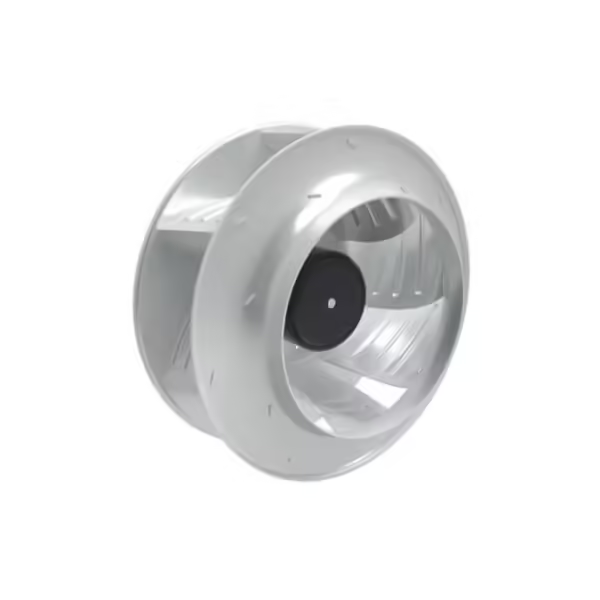
A chemical-resistant centrifugal fan is engineered to operate safely in environments where corrosive gases, acidic vapors, alkaline fumes, or chemical particulates are present. These fans are essential for industries such as chemical production, wastewater treatment, laboratories, battery manufacturing, coating plants, and industrial cleaning lines.
As a direct manufacturer, we design and produce chemical-resistant centrifugal fans built to provide long-term reliability, stable airflow output, and superior corrosion protection—even under continuous chemical exposure.
Why Chemical Resistance Matters in Industrial Ventilation
In chemical-processing environments, ordinary metal fans can corrode rapidly due to exposure to:
- Acid vapors (HCl, H₂SO₄, HF)
- Alkaline gases (ammonia, hydroxides)
- Organic solvents
- Chlorine compounds
- High-humidity, chemical-rich atmospheres
Corrosion not only shortens equipment lifespan but can also cause:
- Air leakage
- Motor failure
- Blade deterioration
- Safety hazards due to chemical buildup
This makes chemical-resistant fans a critical component for safe and efficient ventilation systems.
Engineering Features Required for Chemical-Resistant Fans
A true chemical-resistant centrifugal fan is more than a coated steel fan. It integrates several specialized structural and material protections.
Chemical-Resistant Housing Materials
Common options include:
- PP (polypropylene)
- PVC / CPVC
- FRP (fiberglass-reinforced plastic)
- Stainless steel 316 / 316L
- PVDF for ultra-corrosive environments
These materials protect against acid attack, solvent erosion, and chemical oxidation.
Corrosion-Proof Impeller Construction
Impellers may be molded from PP/FRP or fabricated from 316 stainless steel, depending on application temperature and chemical concentration.
Reinforced Sealing and Isolation
Special gaskets, seals, and shaft protection prevent gases from entering critical mechanical areas.
Anti-Corrosion Fasteners & Hardware
Bolts and connectors use coated steel or stainless steel to prevent rust and mechanical fatigue.
Chemical-Grade Surface Treatment
Protective coatings prevent chemical attack on load-bearing parts.
Comparison of Material Options for Chemical-Resistant Fans
| Material | Chemical Resistance | Temperature Rating | Durability | Typical Applications |
|---|---|---|---|---|
| Polypropylene (PP) | Excellent for acids & alkalis | Up to 100°C | Medium | Labs, wastewater treatment |
| PVC / CPVC | Very good for acidic gases | 60–90°C | High | Chlorine applications |
| FRP | Outstanding solvent resistance | Up to 120°C | Very High | Chemical plants, coatings |
| 316 Stainless Steel | Strong chemical + heat resistance | 600°C | Very High | High-temp chemical processes |
| PVDF | Ultra-resistant to strong acids + fluorides | 130°C | Extreme | Semiconductor, battery plants |
Choosing the correct material ensures optimal fan lifespan and ventilation performance.
Common Industrial Applications
Chemical-resistant centrifugal fans are indispensable in environments where corrosion is a daily challenge.
Chemical Manufacturing Plants
Handles acidic, alkaline, and solvent vapors produced during reactions and processing.
Laboratories & Fume Hoods
Ensures safe extraction of hazardous fumes and chemical gases.
Electroplating & Surface Treatment Lines
Resists corrosive mist and treatment chemicals.
Battery Production Facilities
Withstands sulfuric acid fumes and chemical particulates.
Wastewater Treatment Plants
Handles hydrogen sulfide (H₂S), ammonia, chlorine, and biological chemicals.
Industrial Coating & Painting Operations
Extracts solvent-based fumes safely.
Semiconductor & Electronics Manufacturing
Protects against strong chemical vapor from etching and cleaning processes.
Performance Benefits of Chemical-Resistant Fans
Using a chemical-resistant centrifugal fan ensures:
- Long-term corrosion protection
- Consistent airflow and pressure performance
- Lower maintenance frequency
- Reduced downtime and operational cost
- Improved workplace safety
- Ability to handle corrosive gases continuously
- Stable structural integrity even under chemical attack
These benefits are crucial in harsh industrial fields where ventilation reliability directly impacts safety and productivity.
How to Select the Right Chemical-Resistant Fan
Choosing the correct fan requires evaluating multiple environmental and operational factors.
Consider the following:
- Type and concentration of chemicals present
- Operating temperature and humidity
- Required airflow volume and static pressure
- Material compatibility with chemical composition
- Installation location (indoor/outdoor/ducted)
- Continuous or intermittent operation
- Explosion-proof or non-explosion-proof requirements
- Maintenance accessibility
- Custom dimensions or mounting configurations
Because each chemical environment is unique, we offer custom-engineered solutions tailored to airflow, pressure, material, and durability needs.
Maintenance Tips for Chemical-Resistant Fans
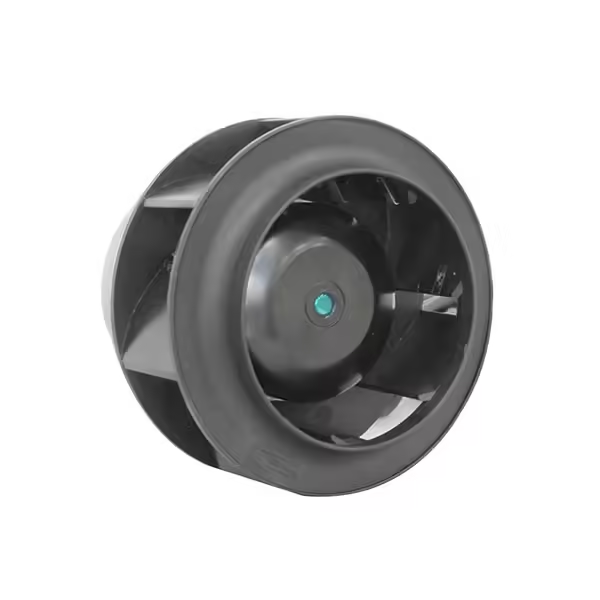
Regular maintenance helps extend lifespan in harsh environments:
- Clean residue buildup regularly
- Inspect impeller for wear or chemical thinning
- Replace seals if signs of leaks are detected
- Check fasteners for corrosion
- Monitor vibration and unusual noise
- Ensure coatings remain intact
- Verify that duct connections remain chemically secure
Preventive care reduces the risk of chemical-induced damage.
Conclusion
A chemical-resistant centrifugal fan is essential for industries where corrosive fumes are part of daily operations. With purpose-built materials, reinforced structural design, and superior corrosion-resistant components, these fans deliver long-term reliability, safe airflow management, and significant cost savings.
As a professional manufacturer, we provide customized chemical-resistant fans engineered to match your exact process requirements—ensuring dependable performance even in the harshest environments.
FAQ
1. What makes a centrifugal fan “chemical resistant”?
It is constructed from materials such as PP, FRP, PVC, or stainless steel that resist corrosion from chemicals.
2. Can these fans handle strong acids?
Yes—depending on material selection (PVDF, PP, or 316L stainless steel for high concentration).
3. Are chemical-resistant fans suitable for laboratories?
Absolutely. They are widely used in fume hoods, lab exhaust systems, and chemical storage rooms.
4. How long does a chemical-resistant fan last?
With proper material selection and maintenance, they typically last significantly longer than standard metal fans in corrosive environments.
5. Can these fans be customized?
Yes. Size, material, impeller type, airflow rate, and sealing systems can be fully customized.