
Table of Contents
Introduction
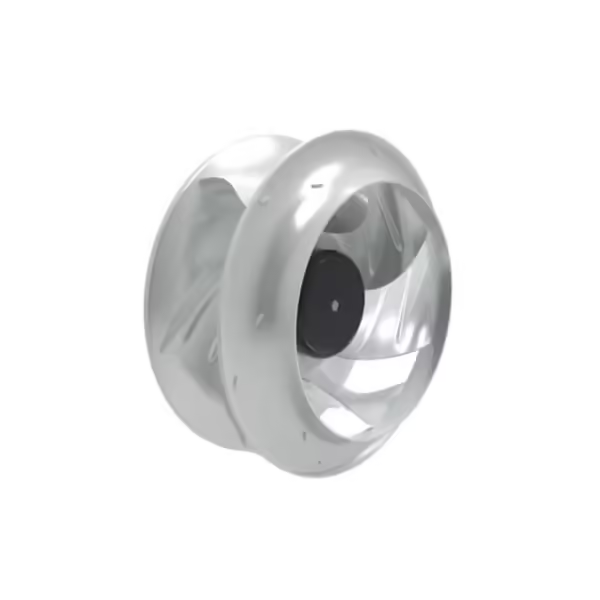
In many ventilation and industrial applications, airflow pressure is as important as volume. A pressure-boosting centrifugal fan is designed to increase air pressure within a duct system while maintaining consistent airflow. These fans are essential for systems with long ducts, high-resistance filters, or processes that require elevated static pressure.
Pressure-boosting centrifugal fans are widely used in industrial plants, commercial HVAC systems, laboratories, and specialized applications where standard fans cannot meet the pressure requirements.
How Pressure-Boosting Centrifugal Fans Work
Pressure-boosting centrifugal fans operate similarly to standard fans but are optimized to increase static pressure:
- High-Strength Impellers – Engineered to move air efficiently against resistance.
- Reinforced Housing – Maintains stability under higher pressure loads.
- High-Performance Motors – Deliver sufficient torque to sustain elevated pressure.
- Optimized Airflow Design – Minimizes turbulence and energy loss while boosting pressure.
This allows pressure-boosting fans to push air through long duct systems, restrictive filters, or high-resistance industrial equipment effectively.
Key Features of Pressure-Boosting Centrifugal Fans
- Enhanced Static Pressure – Maintains airflow even in challenging systems.
- Durable Construction – Handles heavy-duty operations and continuous use.
- Energy-Efficient Designs – Optimized for higher pressure with minimal energy loss.
- Noise Control Options – Can be engineered for quieter operation despite higher pressure.
- Flexible Installation – Floor-mounted, wall-mounted, or inline configurations.
- Customizable Performance – Impellers and motors can be tailored for specific system needs.
Types of Pressure-Boosting Centrifugal Fans
Forward-Curved Pressure-Boosting Fans
Ideal for low- to medium-pressure applications where high airflow is needed in a compact form.
Backward-Curved Pressure-Boosting Fans
Offer high efficiency and are suitable for heavy-duty industrial processes requiring elevated static pressure.
Radial Pressure-Boosting Fans
Designed to handle particulate-laden or corrosive air while maintaining pressure.
Inline Pressure-Boosting Fans
Compact and duct-integrated, ideal for boosting pressure in long or complex duct systems.
Comparison Table: Standard vs Pressure-Boosting Centrifugal Fans
| Feature | Standard Fan | Pressure-Boosting Centrifugal Fan |
|---|---|---|
| Maximum Static Pressure (Pa) | Low | Medium–High |
| Airflow (CFM) | Moderate | High |
| Noise Level (dB) | 70–85 | 65–80 |
| Energy Consumption | Fixed | Optimized for high-pressure |
| Best Use Case | Simple ventilation | Long ducts / high resistance |
Applications of Pressure-Boosting Centrifugal Fans
Pressure-boosting centrifugal fans are used in a variety of scenarios:
- Industrial Facilities – Push air through extensive ductwork in factories and processing plants.
- HVAC Systems – Maintain airflow and pressure in multi-story buildings or long duct runs.
- Laboratories – Ensure precise airflow and pressure for controlled environments.
- Data Centers – Provide pressurized cooling airflow to server racks.
- Commercial Kitchens – Overcome resistance in complex exhaust and filtration systems.
- Agricultural Ventilation – Boost airflow through large barns or greenhouses.
- Dust Collection and Fume Extraction – Maintain pressure to remove contaminants efficiently.
Selecting the Right Pressure-Boosting Fan
When choosing a pressure-boosting centrifugal fan, consider:
- Required Static Pressure (Pa) – Ensure the fan can overcome system resistance.
- Airflow (CFM) – Match airflow to ventilation or process needs.
- Material and Construction – Resistant to corrosion, heat, or particulate exposure.
- Noise Requirements – Higher pressure may increase noise; consider acoustic options.
- Installation Space – Determine whether floor-mounted, wall-mounted, or inline installation is needed.
- Maintenance Access – Easy access for inspection, cleaning, and service of motors and impellers.
Maintenance Tips for Pressure-Boosting Fans
- Regularly clean impellers and housings to prevent pressure loss.
- Inspect bearings and motors for wear, especially under high-pressure conditions.
- Monitor airflow and system pressure for performance consistency.
- Lubricate mechanical components as recommended by the manufacturer.
- Schedule preventive maintenance to extend fan lifespan and ensure efficiency.
Benefits of Working with a Manufacturer
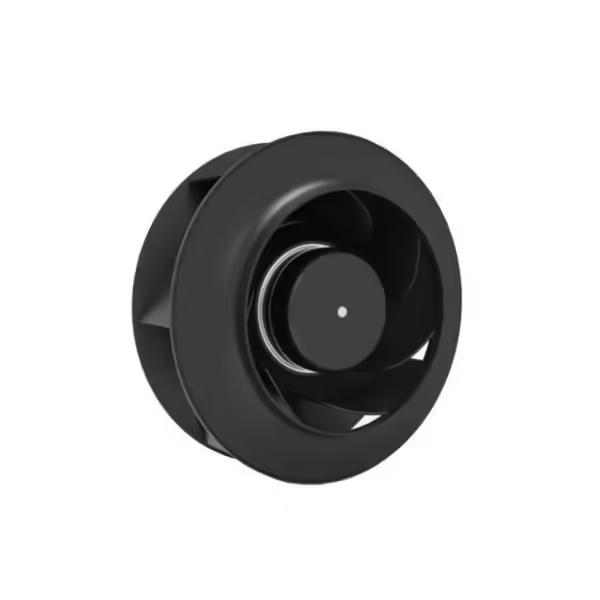
Partnering with a reputable manufacturer ensures:
- Fans engineered for high-pressure applications and long-term reliability.
- Expert guidance on airflow, pressure, and material selection.
- High-quality components built for energy efficiency and durability.
- Support for installation, calibration, and preventive maintenance.
Conclusion
A pressure-boosting centrifugal fan is essential for systems requiring elevated airflow pressure, long duct runs, or high-resistance filtration. By choosing the right model, installing it properly, and maintaining it regularly, users can achieve reliable, efficient, and long-lasting ventilation. Pressure-boosting fans are ideal for industrial, commercial, laboratory, and specialized applications where standard fans cannot meet performance demands.
FAQ
Q1: What is a pressure-boosting centrifugal fan?
A: A fan designed to increase static pressure within a duct system while maintaining consistent airflow.
Q2: Where are pressure-boosting fans commonly used?
A: Industrial facilities, HVAC systems, laboratories, commercial kitchens, data centers, and dust/fume extraction systems.
Q3: How do I select the right pressure-boosting fan?
A: Consider static pressure requirements, airflow needs, material durability, noise levels, and installation space.
Q4: Can these fans operate continuously?
A: Yes, they are designed for continuous operation under high-pressure conditions.
Q5: How should I maintain a pressure-boosting centrifugal fan?
A: Regular cleaning, lubrication, inspection of bearings and motors, and preventive maintenance ensure optimal performance.