
Introduction
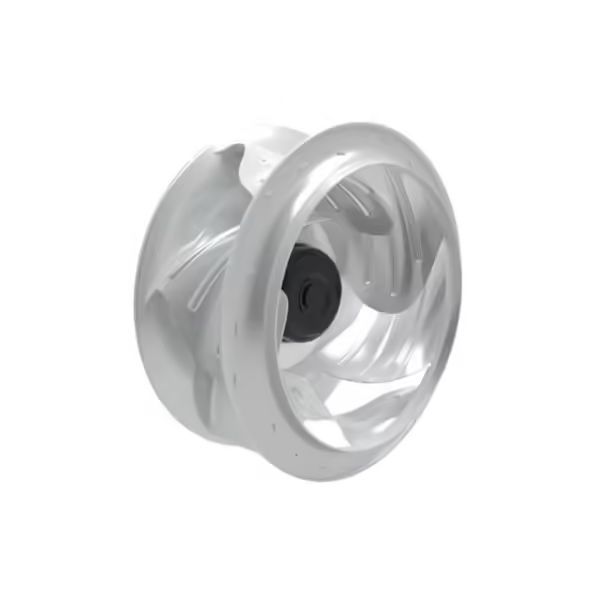
Noise is a critical concern in modern ventilation systems. A quiet centrifugal fan is specifically designed to minimize operational noise while delivering efficient airflow. These fans are widely used in offices, laboratories, cleanrooms, residential buildings, data centers, and commercial kitchens, where comfort and low noise are essential.
By choosing a quiet centrifugal fan, facilities can ensure a peaceful environment without sacrificing performance, making them an ideal solution for both human comfort and sensitive equipment operations.
How Quiet Centrifugal Fans Work
Quiet centrifugal fans operate similarly to standard centrifugal fans but with optimized designs:
- Aerodynamic Impellers: Reduce turbulence and airflow noise.
- Sound-Dampening Housing: Absorbs vibration and mechanical noise.
- Precision Bearings: Smooth rotation to lower mechanical noise.
- Balanced Airflow: Prevents unnecessary vibration and resonance.
The combination of these features ensures that the fan produces significantly less noise while maintaining adequate airflow and static pressure.
Key Features of Quiet Centrifugal Fans
Quiet centrifugal fans stand out due to:
- Low Noise Operation – Typically 45–60 dB compared to 70–85 dB for standard fans.
- Compact and Flexible Design – Easy to install in tight or sensitive spaces.
- Durable Materials – Corrosion-resistant metals or coated steel for long-term reliability.
- Energy Efficiency – Optimized impeller and motor design reduce energy consumption.
- Customizable Options – Fans can be tailored for airflow, pressure, or space constraints.
Types of Quiet Centrifugal Fans
Different designs serve different needs:
Forward Curved Quiet Fans
Ideal for low-pressure HVAC applications where quiet indoor airflow is essential.
Backward Curved Quiet Fans
Provide higher efficiency and lower noise for cleanrooms or office ventilation.
Radial Quiet Fans
Designed for environments handling light particulate matter while maintaining low noise.
Compact Inline Quiet Fans
Fit in tight duct spaces, suitable for residential or small commercial ventilation systems.
Comparison Table: Quiet vs Standard Centrifugal Fans
| Feature | Standard Fan | Quiet Centrifugal Fan |
|---|---|---|
| Noise Level (dB) | 70–85 | 45–60 |
| Airflow Efficiency | Medium | High |
| Energy Consumption | Moderate | Moderate–High |
| Maintenance Frequency | Medium | Medium–Low |
| Typical Use Case | Industrial | Offices, Labs, Homes |
Applications of Quiet Centrifugal Fans
Quiet centrifugal fans are versatile and widely used:
- Offices and Workspaces – Maintain comfortable airflow without disrupting work.
- Laboratories and Cleanrooms – Protect sensitive equipment while minimizing noise.
- Residential Ventilation – Enhance comfort in homes and apartments.
- Server Rooms and Data Centers – Provide efficient cooling while keeping noise low.
- Commercial Kitchens – Remove heat and smoke without excessive noise.
- Healthcare Facilities – Ensure patient comfort and compliance with noise regulations.
Selecting the Right Quiet Centrifugal Fan
Consider these factors when choosing a fan:
- Airflow Requirements (CFM) – Match your space’s ventilation needs.
- Noise Level (dB) – Choose a fan rated for low-noise environments.
- Installation Space – Compact models work better in tight or ceiling-mounted spaces.
- Durability – Corrosion-resistant materials extend fan life.
- Maintenance Access – Easy access reduces downtime and keeps noise low.
Maintenance Tips for Quiet Fans
Proper maintenance ensures quiet operation over time:
- Lubricate bearings and inspect motor health regularly.
- Clean impellers and fan housings to maintain airflow.
- Check alignment and vibration levels periodically.
- Replace worn parts promptly to prevent noise increase.
- Schedule preventive maintenance for consistent performance.
Benefits of Working with a Reliable Manufacturer
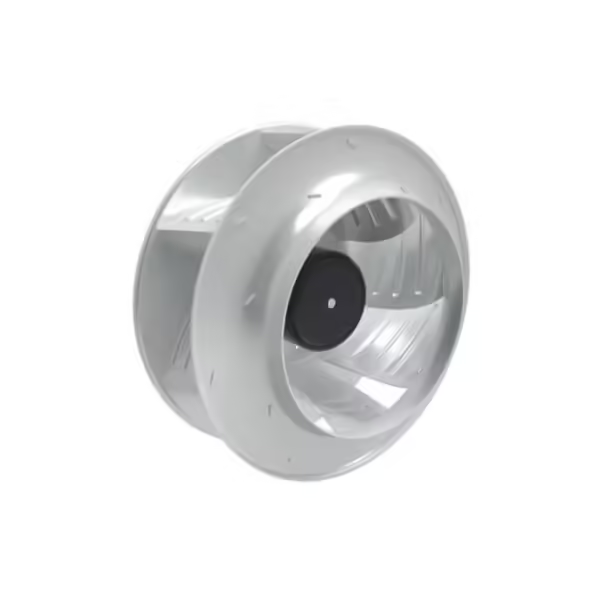
Partnering with a trusted manufacturer ensures:
- Access to fans designed for low-noise environments.
- Tailored solutions for airflow, static pressure, and installation requirements.
- High-quality components and rigorous testing for consistent performance.
- Expert support for troubleshooting, installation, and maintenance.
Conclusion
A quiet centrifugal fan is an essential solution for environments where both noise control and reliable airflow are crucial. By selecting the right fan, ensuring proper installation, and performing regular maintenance, facilities can achieve consistent ventilation, energy efficiency, and minimal sound disturbance. Quiet centrifugal fans are ideal for residential, commercial, and light industrial applications, providing comfort, safety, and long-term reliability.
FAQ
Q1: What makes a centrifugal fan quiet?
A: Optimized impellers, sound-absorbing housings, precision motors, and balanced airflow minimize operational noise.
Q2: Where are quiet centrifugal fans commonly used?
A: Offices, laboratories, cleanrooms, residential ventilation, server rooms, and commercial kitchens.
Q3: How do I choose the right quiet fan?
A: Consider airflow (CFM), noise level (dB), installation space, and material durability.
Q4: Can quiet fans handle high airflow applications?
A: Yes, modern quiet centrifugal fans are designed to deliver high airflow efficiently while keeping noise low.
Q5: How can I maintain a quiet fan effectively?
A: Regular cleaning, lubrication, and inspection of impellers, housings, and motors help maintain low noise and long-term performance.