
Table of Contents
What Is a Quiet Centrifugal Blower?
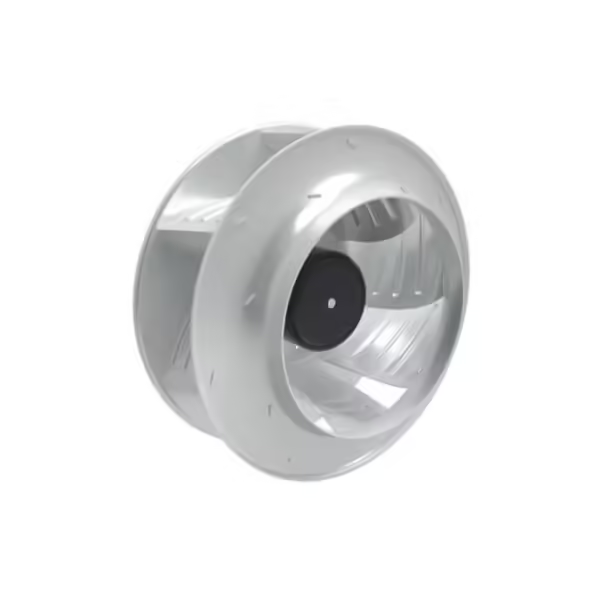
A quiet centrifugal blower is a type of mechanical fan designed to move air or gas with high efficiency while minimizing noise. Unlike traditional axial fans that push air in a straight line, centrifugal blowers use a rotating impeller to generate airflow perpendicular to the intake, providing higher pressure and better control.
Quiet centrifugal blowers are widely used in applications where noise reduction is crucial, including HVAC systems, cleanrooms, laboratories, and industrial environments. By integrating low-noise technology, these blowers maintain optimal airflow without creating disruptive sound levels.
Key differences between centrifugal and axial blowers include airflow direction, pressure output, and noise generation. While axial fans are suitable for low-pressure, high-volume applications, centrifugal blowers are ideal for systems requiring higher pressure and more precise airflow control.
Key Benefits of Using a Quiet Centrifugal Blower
- Noise Reduction: Quiet centrifugal blowers are engineered to operate at lower decibel levels, making them suitable for office buildings, hospitals, and laboratories.
- Energy Efficiency: Advanced designs ensure high airflow output while minimizing energy consumption, resulting in reduced operational costs.
- Enhanced Airflow Control: With adjustable speed and pressure capabilities, these blowers provide precise ventilation control.
- Durability and Low Maintenance: High-quality materials and construction guarantee longer service life, reducing downtime and maintenance efforts.
How to Choose the Right Quiet Centrifugal Blower
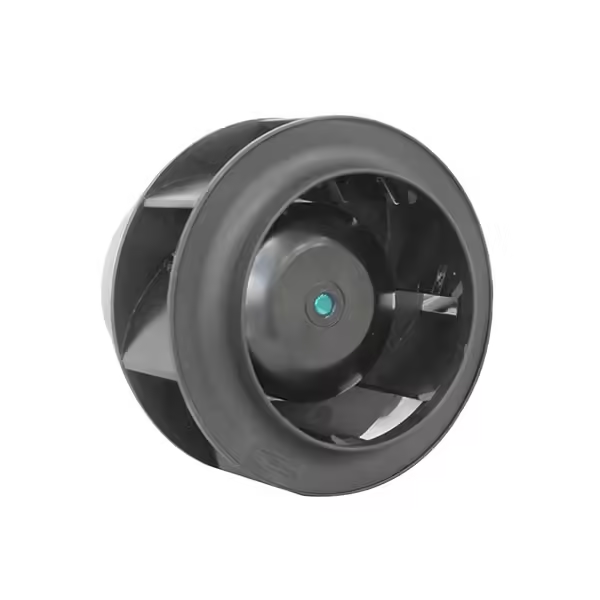
Selecting the right blower for your application requires careful consideration of several factors:
- Airflow and Pressure Requirements: Determine the volume of air needed (CFM) and the required pressure to ensure optimal performance.
- Noise Levels: Evaluate the dB rating to ensure it meets your facility’s sound requirements.
- Size and Installation Space: Choose a compact model for limited spaces or a larger industrial blower for extensive systems.
- Energy Efficiency vs Standard Models: Energy-efficient blowers save operational costs over time and may qualify for sustainability certifications.
Applications of Quiet Centrifugal Blowers
Quiet centrifugal blowers are highly versatile and can be applied across various industries:
- HVAC Systems: Ensures smooth and quiet ventilation in air conditioning and heating units.
- Cleanrooms and Laboratories: Maintains sterile and noise-free environments critical for experiments and medical applications.
- Industrial Exhaust: Removes dust, fumes, and heat efficiently in factories without excessive noise.
- Electronics and 3D Printer Cooling: Protects sensitive components by providing consistent airflow without vibration or noise.
Technical Specifications and Features to Consider
When evaluating quiet centrifugal blowers, the following specifications are crucial:
| Feature | Description | Importance |
|---|---|---|
| Airflow (CFM) | Measures the volume of air moved per minute | Ensures the system meets ventilation requirements |
| Pressure Rating | Maximum pressure the blower can achieve | Critical for ductwork and exhaust systems |
| Power Consumption | Energy required to operate the blower | Impacts operational costs and efficiency |
| Noise Level (dB) | Sound produced during operation | Key for quiet environments |
| Material & Construction | Stainless steel, aluminum, or custom materials | Determines durability and lifespan |
| Variable Speed | Ability to adjust airflow | Enhances control and energy savings |
| Custom Options | Tailored designs for specific applications | Meets unique industrial requirements |
Maintenance and Installation Tips
Proper installation and routine maintenance are essential for maximizing performance and extending the life of your blower. Key tips include:
- Ensure secure mounting and correct alignment to prevent vibration and noise.
- Follow the manufacturer’s maintenance schedule, including cleaning the impeller and checking bearings.
- Inspect electrical connections and power supply to avoid malfunctions.
- Address unusual noise or airflow fluctuations immediately to prevent long-term damage.
Comparing Quiet Centrifugal Blowers
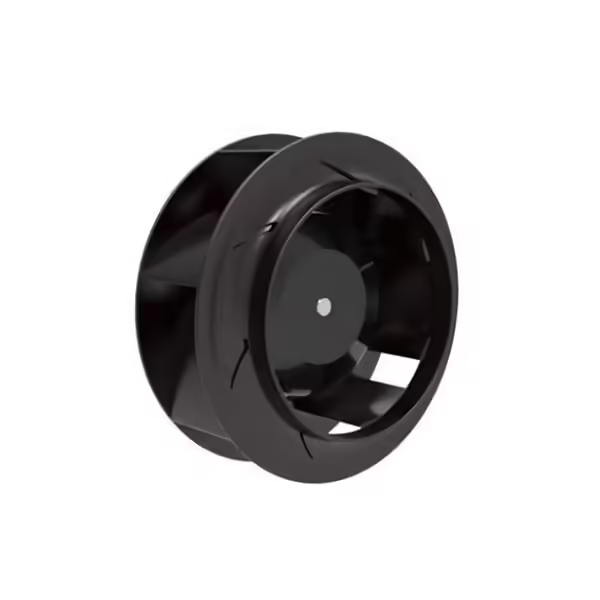
Understanding the differences between blower types can guide purchasing decisions:
- Quiet Centrifugal vs Standard Centrifugal: Quiet models reduce noise without sacrificing performance.
- Compact vs Industrial: Compact blowers fit tight spaces, while industrial models handle high-volume air and pressure.
- Custom vs Off-the-Shelf: Custom blowers can be tailored for unique applications, such as high-temperature exhaust or sensitive lab environments.
Why Choose a Manufacturer Directly for Your Quiet Centrifugal Blower
As a manufacturer, we provide direct access to:
- Competitive Pricing: Eliminates middlemen and reduces procurement costs.
- Customization Options: Design blowers to meet exact specifications for airflow, noise level, and size.
- Expert Guidance: Engineers assist in selecting the best model for your application.
- Quality Assurance: Products are built with precision and undergo rigorous testing.
- After-Sales Support: Reliable service and maintenance guidance for long-term operation.
Energy Efficiency and Environmental Benefits
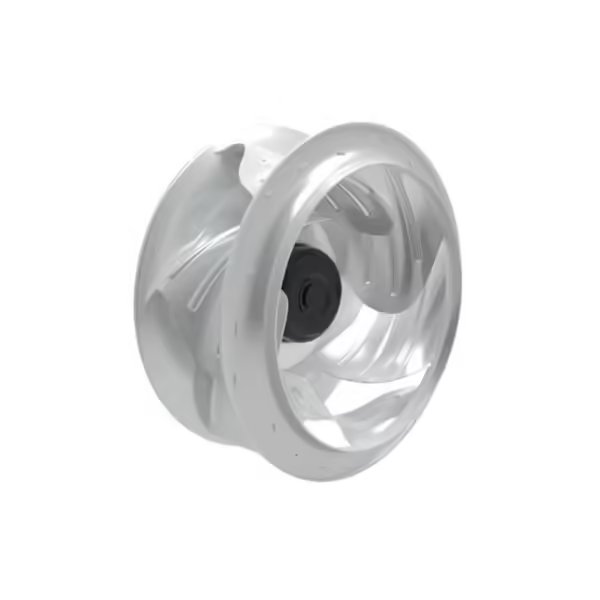
Modern quiet centrifugal blowers are designed with sustainability in mind:
- Lower energy consumption reduces operational costs and carbon footprint.
- Noise reduction minimizes environmental disturbance, particularly in urban or sensitive areas.
- Using durable materials and optimized designs supports long-term, sustainable operations.
Conclusion
Quiet centrifugal blowers combine high efficiency, low noise, and precise airflow control, making them ideal for a wide range of industrial and commercial applications. Choosing a manufacturer directly ensures quality, customization, and long-term support. By selecting the right model, implementing proper installation, and maintaining it regularly, you can optimize airflow, reduce energy costs, and create a quieter, more efficient working environment.
Investing in energy-efficient, low-noise centrifugal blowers not only improves operational performance but also enhances workplace comfort and sustainability. Explore our range of industrial, custom, and HVAC-compatible quiet centrifugal blowers to find the perfect solution for your facility.
FAQ
1. How quiet is a “quiet” centrifugal blower?
Most models operate between 50–65 dB, which is significantly lower than standard industrial blowers.
2. Can it be customized for specific industrial applications?
Yes, manufacturers offer tailored airflow, size, and material options to meet unique needs.
3. What maintenance is required?
Routine inspection, impeller cleaning, and lubrication of bearings are recommended for optimal performance.
4. How do I select the right airflow capacity?
Calculate required CFM based on room size, ductwork, and intended application. Consult technical specifications for guidance.
5. What industries benefit most from quiet centrifugal blowers?
HVAC, cleanrooms, laboratories, electronics cooling, and industrial exhaust systems.