
Table of Contents
Metal centrifugal fans are one of the most important components in industrial ventilation, HVAC systems, and various manufacturing processes. As a metal centrifugal fan manufacturer, we design and produce high-performance centrifugal fans, centrifugal blowers, and custom industrial fans that meet the needs of diverse applications. In this guide, we will explain how metal centrifugal fans work, what makes them different from other types of fans, and how to select the right fan for your project.
What Is a Metal Centrifugal Fan? (Definition & Key Features)
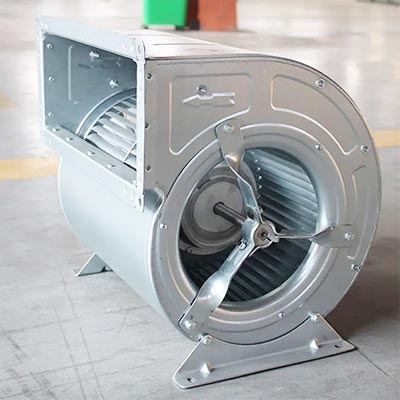
A metal centrifugal fan is a type of mechanical device that uses centrifugal force to move air or gas. Unlike axial fans, which push air in a straight line, centrifugal fans use a rotating impeller to draw air into the center and expel it outward through a spiral housing. This design creates higher static pressure and allows the fan to handle longer duct systems and heavier loads.
Metal centrifugal fan vs axial fan: main differences
The most significant difference is the direction of airflow and pressure. Axial fans are best for high airflow and low pressure, while metal centrifugal fans are ideal for medium to high pressure applications. In industrial settings, centrifugal fans are often used for dust collection, exhaust systems, and air handling units (AHUs).
Why metal material matters
Metal centrifugal fans are usually made from stainless steel, carbon steel, or aluminum alloy. The metal material provides durability, heat resistance, and corrosion resistance—features that are essential in harsh environments such as chemical plants, mining sites, and high-temperature facilities.
How Metal Centrifugal Fans Work (Working Principle Explained)
A metal centrifugal fan operates by converting rotational energy into kinetic energy. The motor drives the impeller, which rotates at high speed. Air is drawn into the center of the impeller and pushed outward by centrifugal force. The air then enters the spiral casing and is discharged through the outlet.
Static pressure and airflow relationship
Centrifugal fans are known for their ability to generate high static pressure. Static pressure is the resistance that the fan must overcome to push air through ducts, filters, or equipment. In general, the higher the static pressure, the lower the airflow (CFM). Manufacturers often provide performance curves to help engineers select the right fan.
Centrifugal fan performance curve overview
A performance curve is a chart that shows airflow versus static pressure. This curve helps to determine the operating point of the fan under different system conditions. As a manufacturer, we provide performance curves for each model to ensure accurate selection and system design.
Core Components of a Metal Centrifugal Fan (Manufacturer Breakdown)
Understanding the key components of a metal centrifugal fan helps you appreciate its performance and maintenance requirements.
Impeller types (backward-curved, forward-curved, radial)
- Backward-curved impeller: Most common in industrial fans due to high efficiency and low noise.
- Forward-curved impeller: Suitable for low-pressure applications and compact designs.
- Radial impeller: Ideal for handling dust, particles, and heavy-duty conditions.
Housing/scroll casing
The housing collects and guides airflow to the outlet. A well-designed housing reduces turbulence and improves efficiency. Our manufacturing process ensures accurate housing dimensions and smooth airflow.
Motor and shaft
The motor provides power, and the shaft transfers rotational energy to the impeller. High-quality motors and precision shafts are essential for stable operation and long service life.
Bearings and coupling
Bearings reduce friction and support the rotating shaft. Couplings connect the motor and impeller, ensuring smooth power transfer. We use premium bearings and couplings to ensure reliability in high-speed applications.
Inlet/outlet duct and flange
The inlet and outlet must match the duct system to ensure proper airflow. Flanges provide secure connections for ductwork and air handling units.
Common Applications of Metal Centrifugal Fans (Industrial & HVAC Use)
Metal centrifugal fans are widely used in many industries because they can handle high pressure, high temperature, and harsh environments.
Industrial ventilation
In factories and workshops, centrifugal fans are used for exhaust systems, dust collection, and fume extraction. They help maintain air quality and protect workers.
HVAC systems
Metal centrifugal fans are essential in air handling units (AHUs), air conditioning systems, and building ventilation. They ensure stable airflow and efficient heating or cooling.
High temperature environments
In boilers, furnaces, and kilns, metal centrifugal fans can handle hot air and maintain stable airflow at high temperatures.
Chemical and corrosion-prone environments
Stainless steel centrifugal fans are often used in chemical plants where corrosive gases and liquids are present. Metal construction ensures long-term durability.
Mining, tunnel ventilation, and wastewater treatment
These applications require high-pressure fans that can operate continuously. Metal centrifugal fans are ideal due to their strong construction and reliable performance.
Metal Centrifugal Fan vs Centrifugal Blower: What’s the Difference?
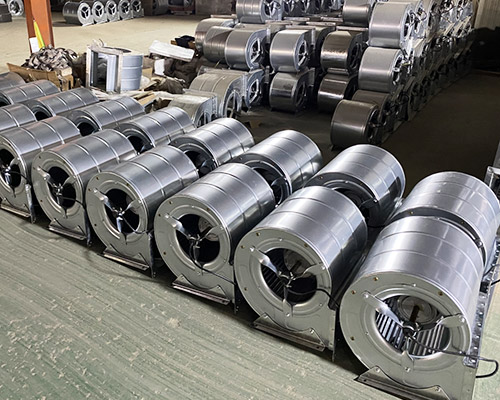
Many people use the terms “centrifugal fan” and “centrifugal blower” interchangeably, but they are not always the same. The difference lies in their design, pressure, and application.
Centrifugal fan vs centrifugal blower (pressure, airflow, applications)
- Centrifugal fan: Designed for medium pressure and high airflow. Common in HVAC, ventilation, and industrial exhaust systems.
- Centrifugal blower: Designed for high pressure and more precise airflow control. Used in pneumatic conveying, combustion air systems, and specialized industrial processes.
When to use a blower instead of a fan
If your system requires higher static pressure or needs to move air through long ducts or filters, a blower may be more suitable. Our engineering team can help you choose the correct model based on your application.
How to choose between fan and blower for your project
The decision depends on required airflow (CFM), static pressure (Pa), and system resistance. A proper system design ensures the fan or blower operates at its best efficiency point (BEP).
How to Choose the Right Metal Centrifugal Fan (Selection Guide)
Choosing the right metal centrifugal fan is crucial for performance, energy efficiency, and long-term reliability. Here are the main factors you should consider.
How to calculate required airflow (CFM/m³/h)
Airflow is usually measured in cubic feet per minute (CFM) or cubic meters per hour (m³/h). The required airflow depends on the size of the space, the number of air changes per hour, and the specific application.
How to determine required static pressure
Static pressure is influenced by duct length, filters, dampers, and other resistance factors. A system with high resistance requires a fan with higher static pressure capability.
How to choose the right motor power and speed (RPM)
Motor power depends on airflow, pressure, and efficiency. Higher pressure requires more power. We recommend choosing a motor with a slight margin to ensure stable performance.
Noise level requirements and vibration control
Noise and vibration are common concerns in industrial and commercial settings. Proper balancing, high-quality bearings, and optimized impeller design can reduce noise levels significantly.
Material selection (stainless steel vs carbon steel vs aluminum)
- Stainless steel: Best for corrosion resistance and high temperature.
- Carbon steel: Strong and cost-effective for general industrial use.
- Aluminum: Lightweight and suitable for lower temperature applications.
Why Buying from a Metal Centrifugal Fan Manufacturer Matters
As a manufacturer, we have full control over quality, design, and production. This provides several advantages over buying from resellers or distributors.
Quality control and manufacturing standards
We implement strict quality control processes from raw material inspection to final testing. This ensures stable performance, long service life, and reliable operation.
Customization options (custom fan design, OEM/ODM)
We offer custom centrifugal fan design and OEM/ODM services. If your project requires special dimensions, materials, or performance requirements, we can deliver a tailored solution.
Better lead time and cost advantage
Manufacturers can provide shorter lead times and more competitive pricing. Without middlemen, you can get a better value and faster delivery.
After-sales service and spare parts support
As a manufacturer, we provide full after-sales support, including spare parts, maintenance guidance, and technical assistance.
Metal Centrifugal Fan Maintenance & Troubleshooting (Practical Tips)
Proper maintenance is essential to extend the life of your centrifugal fan and avoid downtime.
Routine inspection checklist (blade wear, bearing noise, vibration)
- Inspect blades for wear, cracks, or deformation
- Check bearings for noise or overheating
- Verify shaft alignment and coupling integrity
- Inspect housing for corrosion or damage
- Monitor airflow and pressure performance
How to reduce noise and vibration
- Ensure the fan is properly balanced
- Use vibration isolators or mounts
- Check for loose bolts or misalignment
- Use sound-absorbing ducts or silencers
Common failures and solutions (motor overheating, airflow drop)
- Motor overheating: Check voltage, load, and ventilation
- Airflow drop: Check for clogged filters or blocked ducts
- Excess vibration: Check impeller balance and bearing condition
How to clean and prolong fan life
Regular cleaning of the impeller and housing prevents dust accumulation and reduces airflow resistance. For industrial applications, we recommend a scheduled maintenance plan.
Metal Centrifugal Fan Performance Optimization (Energy Saving Tips)
Optimizing fan performance can reduce energy costs and improve system reliability.
How to improve efficiency (impeller design, balancing)
- Use backward-curved impellers for high efficiency
- Ensure precise balancing to reduce vibration
- Optimize housing design for smoother airflow
Variable frequency drive (VFD) for energy saving
VFDs allow speed control based on system demand. This reduces power consumption and improves system flexibility.
Proper duct design and system optimization
A well-designed duct system reduces resistance and improves airflow efficiency. Use smooth ducts, minimize sharp bends, and avoid unnecessary restrictions.
How to choose high-efficiency industrial fans
Look for fans with high efficiency at the required operating point. Manufacturers often provide efficiency curves and performance data to help you choose.
Performance Comparison Table (Quick Reference)
| Parameter | Metal Centrifugal Fan | Axial Fan | Centrifugal Blower |
|---|---|---|---|
| Airflow (CFM) | Medium to High | High | Medium |
| Static Pressure | High | Low | Very High |
| Noise Level | Medium | Low to Medium | Medium to High |
| Best For | Industrial HVAC, ventilation, dust extraction | Cooling, ventilation | Pneumatic conveying, combustion air |
| Material | Stainless steel, carbon steel, aluminum | Usually lightweight metals/plastic | Heavy-duty metals |
Conclusion
Metal centrifugal fans are a critical part of industrial ventilation, HVAC systems, and many specialized applications. As a metal centrifugal fan manufacturer, we understand the importance of accurate design, reliable materials, and high-quality production. Whether you need a high pressure fan, centrifugal blower, or a custom industrial fan, choosing the right manufacturer can save you time, money, and maintenance costs.
If you are looking for a metal centrifugal fan supplier with strong manufacturing capabilities and professional customization services, feel free to contact us for a quote. Our engineering team can help you select the best solution based on your airflow, static pressure, and application requirements.
FAQ
What is a metal centrifugal fan used for?
Metal centrifugal fans are used for industrial ventilation, HVAC systems, dust collection, exhaust systems, and high-temperature applications.
How often should a centrifugal fan be maintained?
Maintenance frequency depends on the environment. For dusty or corrosive environments, monthly inspections are recommended. For normal conditions, quarterly inspections may be sufficient.
Why is my centrifugal fan noisy?
Noise can be caused by imbalance, bearing wear, improper installation, or airflow restrictions.
How to choose between a fan and blower?
Choose based on required airflow and static pressure. Blowers are suitable for higher pressure and more demanding systems.
How to get a custom metal centrifugal fan quote?
Contact the manufacturer with your required airflow, static pressure, dimensions, and application details. We will provide a professional quote and design solution.