
Table of Contents
Introduction: Why Durability Matters in Centrifugal Blowers
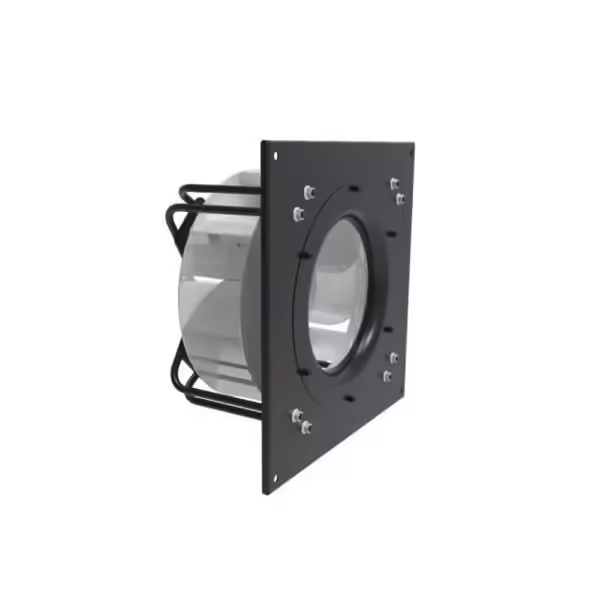
In today’s industrial and commercial operations, equipment reliability is critical. Unplanned downtime can cost thousands of dollars per hour in lost productivity, delayed production, and repair expenses. A durable centrifugal blower is designed to provide consistent airflow, long service life, and minimal maintenance, even under harsh operating conditions.
Unlike standard blowers, which may degrade quickly due to high-speed impeller wear, vibration, or corrosion, durable centrifugal blowers are engineered to handle continuous operation, high temperatures, and dusty or corrosive environments.
Industries increasingly demand blowers that can deliver reliable airflow for ventilation, material handling, drying, cooling, and exhaust applications, making durability a key factor in purchasing decisions.
Key Advantages of Durable Centrifugal Blowers
Durable centrifugal blowers provide tangible benefits that can significantly improve operational efficiency and reduce long-term costs:
- Extended Lifespan:
- High-grade materials such as stainless steel, coated aluminum, or reinforced polymers ensure resistance to corrosion, abrasion, and heat.
- Impellers are precision-balanced to minimize wear and extend service life.
- Consistent Airflow:
- Advanced impeller and casing designs maintain stable pressure and airflow even in systems with high duct resistance or fluctuating demands.
- Avoids production delays caused by airflow inconsistencies.
- Maintenance Efficiency:
- Modular design and easily removable components allow for faster inspection and servicing.
- Reduces downtime and labor costs associated with routine maintenance.
- Energy Optimization:
- Optimized impeller shapes, motor selection, and aerodynamic casing reduce electricity consumption while maintaining peak performance.
- Some models offer variable frequency drives (VFD) for dynamic airflow control, further lowering energy usage.
- Noise and Vibration Control:
- Precision-balanced components reduce vibration, improving workplace comfort and preventing mechanical stress on connected equipment.
Insight: According to industry data, replacing standard centrifugal blowers with durable models can reduce maintenance-related downtime by 20–40% and improve energy efficiency by 15–25%.
Advanced Design Features
Modern durable centrifugal blowers incorporate cutting-edge features that make them suitable for demanding industrial and commercial applications:
- Reinforced Impellers: Forward-curved, backward-curved, or radial designs ensure high efficiency and long-term stability.
- Heavy-Duty Casings: Industrial-grade steel or aluminum housing resists corrosion, dust, and high-pressure environments.
- Precision Bearings and Shafts: High-quality bearings reduce friction and wear, maintaining performance for thousands of operational hours.
- Variable Speed Options: Adjustable motors allow energy-efficient operation and compatibility with automated systems.
- Corrosion and Abrasion Resistance: Coatings and surface treatments extend the operational life in aggressive chemical or particulate-laden environments.
These design elements ensure that durable centrifugal blowers can withstand continuous operation under high stress, making them reliable for industrial and commercial applications alike.
Real-World Applications
Durable centrifugal blowers are versatile and widely used across multiple industries:
- Food & Beverage Production:
- Provides controlled airflow in processing lines to maintain hygiene standards.
- Example: A packaging facility using durable blowers maintained airflow for 24/7 operations with minimal maintenance downtime.
- Pharmaceutical & Biotechnology:
- Supports precise ventilation in cleanrooms and laboratory environments.
- Low-vibration design prevents contamination of sensitive processes.
- Power Generation & Energy Plants:
- Provides cooling for turbines, generators, and HVAC systems.
- Durable construction ensures reliable operation under high temperatures and continuous load.
- Metal Processing & Foundries:
- Handles high-temperature exhaust, fumes, and particulate-laden air.
- Example: Foundries replaced standard blowers with durable centrifugal blowers and extended operational cycles by 30%, reducing maintenance costs significantly.
- Laboratories, Cleanrooms, and Electronics Manufacturing:
- Delivers stable, low-vibration airflow to sensitive production environments.
- Ensures consistent environmental control critical for high-quality manufacturing.
- Material Handling & Dust Collection Systems:
- Efficiently transports powders, grains, and other particulates.
- Reduces energy consumption while maintaining required pressure and airflow.
Case Study: A chemical processing plant upgraded its ventilation system to durable centrifugal blowers, achieving 30% fewer maintenance interruptions and a 20% reduction in energy costs over one year.
Selecting the Right Durable Centrifugal Blower
When choosing a durable centrifugal blower, it’s critical to evaluate several parameters:
- Airflow Requirements (CFM / m³/h): Ensure the blower meets peak and continuous demands of your system.
- Static Pressure (Pa): Must overcome resistance from ducts, filters, and connected equipment.
- Motor Type and Efficiency: Select motors designed for continuous industrial operation and energy efficiency.
- Environmental Conditions: Consider temperature extremes, humidity, dust, or corrosive substances.
- Maintenance Accessibility: Check for modularity and ease of component replacement.
- Noise and Vibration Limits: Especially important in indoor facilities or sensitive environments.
- Customization Options: Impeller type, housing material, motor size, and mounting style should match your process requirements.
Proper selection ensures maximum reliability, operational efficiency, and long-term cost savings.
Energy Efficiency and Cost Savings
Durable centrifugal blowers not only last longer but can significantly reduce operational costs:
- Optimized motor and impeller design reduces power consumption by up to 25% compared to conventional models.
- Less downtime and fewer replacements decrease maintenance and labor costs.
- VFD-enabled blowers allow for adaptive airflow, reducing electricity use during off-peak periods.
Data Example: In industrial HVAC systems, replacing standard blowers with durable models resulted in a 15–20% reduction in monthly energy bills.
Industry Trends and Future Outlook
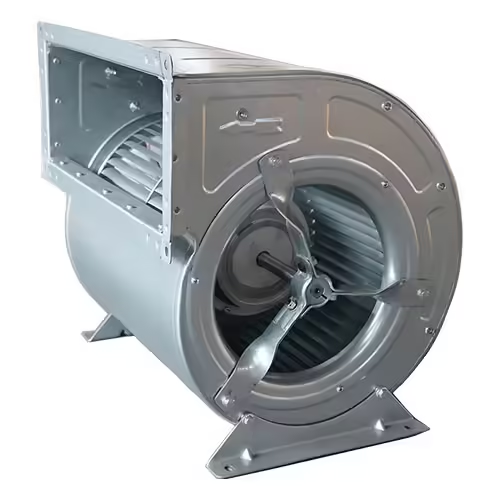
The centrifugal blower industry is evolving rapidly, focusing on efficiency, sustainability, and intelligent operation:
- IoT and Smart Monitoring: Predictive maintenance through sensors reduces unexpected failures.
- Eco-Friendly Designs: Low-noise, energy-efficient motors with recyclable materials.
- Advanced Materials: Composites and coatings resist high temperatures, abrasion, and corrosive chemicals.
- Modular and Scalable Systems: Blowers can be upgraded or integrated into larger networks for growing facilities.
These trends ensure durable centrifugal blowers remain a cornerstone of modern industrial efficiency, balancing reliability, cost savings, and sustainability.
Conclusion
A durable centrifugal blower is more than a ventilation device—it is a long-term investment in efficiency, reliability, and operational stability. With advanced materials, energy-efficient motors, and low-maintenance designs, these blowers are essential for industries seeking high uptime, cost reduction, and consistent airflow.
Need help selecting the right durable centrifugal blower for your facility? Contact our experts today for a customized solution that maximizes reliability, reduces maintenance, and ensures optimal airflow for your industrial operations.
FAQ
Q1: What makes a centrifugal blower “durable”?
A: Durable centrifugal blowers are built with high-strength impellers, industrial-grade housings, precision bearings, and corrosion-resistant materials to withstand harsh industrial conditions.
Q2: Which industries benefit most from durable centrifugal blowers?
A: Industries such as food & beverage, pharmaceuticals, power generation, metal processing, and laboratories benefit from reliable, long-lasting airflow solutions.
Q3: How do durable centrifugal blowers reduce maintenance costs?
A: Their modular design and easily accessible components allow for quick inspection and servicing, reducing downtime and labor expenses.
Q4: Can durable centrifugal blowers improve energy efficiency?
A: Yes. Optimized impellers, efficient motors, and optional variable speed drives reduce energy consumption while maintaining consistent airflow.
Q5: Are durable centrifugal blowers customizable for specific applications?
A: Absolutely. Impeller types, housing materials, motor sizes, and mounting styles can be tailored to match unique industrial or commercial process requirements.