
Table of Contents
What Is a High Efficiency Centrifugal Blower?
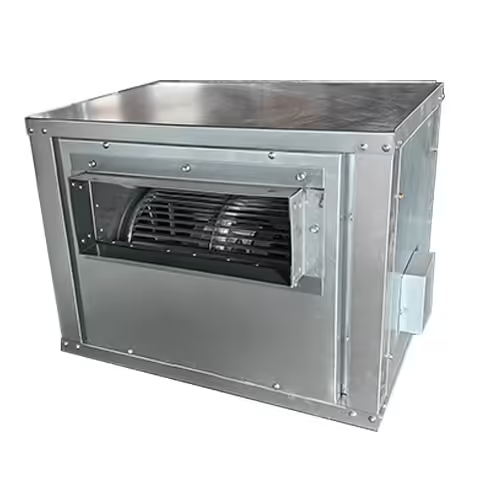
A high efficiency centrifugal blower is an industrial blower designed to maximize airflow performance while minimizing energy consumption. These blowers are engineered with optimized impellers, precision motors, and durable housings to deliver consistent air movement at reduced power costs.
High efficiency centrifugal blowers are commonly used in industrial plants, HVAC systems, dust extraction, and process industries where both performance and energy savings are critical.
Benefits of High Efficiency Centrifugal Blowers
High efficiency centrifugal blowers provide several advantages:
- Energy Savings – Optimized design reduces electricity usage while maintaining airflow.
- Improved Performance – Delivers consistent airflow and pressure across variable operating conditions.
- Durable Construction – Heavy-duty materials ensure long-term reliability even in harsh environments.
- Lower Operational Costs – Less energy consumption and reduced maintenance.
- Versatile Applications – Ideal for ventilation, exhaust, drying, cooling, and material handling systems.
Example: A manufacturing plant replacing standard blowers with high efficiency centrifugal blowers reduced energy costs by 20% while maintaining the same airflow.
Key Features of High Efficiency Centrifugal Blowers
High-quality models typically include:
- Optimized Impellers – Backward-curved or radial designs for maximum efficiency.
- Energy-Efficient Motors – Reduce power consumption without compromising performance.
- Robust Housing – Industrial-grade materials to withstand dust, heat, and moisture.
- Noise Reduction – Precision balancing and acoustic design minimize operational noise.
- Maintenance-Friendly Design – Accessible bearings, impellers, and filters for easy service.
These features make high efficiency centrifugal blowers ideal for industrial and commercial applications requiring reliable airflow with reduced energy costs.
Applications of High Efficiency Centrifugal Blowers
- HVAC Systems – Efficiently supply air in commercial and industrial facilities.
- Industrial Exhaust & Ventilation – Remove fumes, smoke, or heat with optimized energy use.
- Dust Collection Systems – Maintain airflow while reducing energy consumption.
- Cooling & Drying Processes – High efficiency airflow for ovens, dryers, and chillers.
- Material Handling – Pneumatic conveying of powders or granules with lower operational cost.
Data Insight: High efficiency blowers can save up to 25–30% in energy consumption compared to conventional centrifugal blowers in industrial environments.
How to Choose the Right High Efficiency Centrifugal Blower
Consider these factors:
- Airflow (CFM / m³/h) – Ensure the blower meets system demand.
- Static Pressure (Pa) – Must overcome duct, filter, or process resistance.
- Motor Efficiency – Choose energy-efficient motors compatible with your system.
- Operating Environment – Temperature, humidity, dust, or corrosive conditions.
- Noise Level – Especially for indoor or sensitive environments.
- Customization Options – Impeller design, housing materials, and mounting style.
Selecting the right blower ensures maximum efficiency, reliable performance, and reduced energy costs.
High Efficiency Centrifugal Blower vs Standard Blowers
| Feature | Standard Blower | High Efficiency Centrifugal Blower |
|---|---|---|
| Energy Consumption | High | Reduced by up to 30% |
| Airflow Consistency | Moderate | High, optimized design |
| Operational Costs | Standard | Lower due to energy efficiency |
| Durability | Moderate | Heavy-duty industrial-grade |
| Noise | Moderate | Reduced with precision balancing |
High efficiency centrifugal blowers are the ideal choice for industrial systems that require energy savings without compromising performance.
Manufacturing Expertise and Custom Solutions
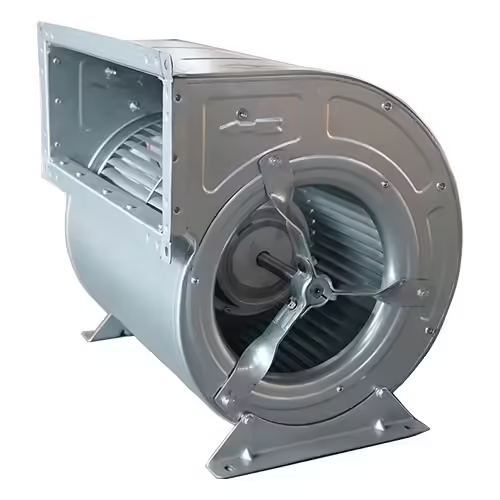
As a professional manufacturer, we provide high efficiency centrifugal blowers with:
- Custom airflow, pressure, and efficiency specifications
- Industrial-grade construction for durability
- OEM and bulk supply options
- Technical support for installation, integration, and maintenance
Our solutions ensure energy-efficient, reliable, and high-performance airflow for industrial, commercial, and manufacturing applications.
Conclusion
High efficiency centrifugal blowers combine optimized performance, reduced energy consumption, and long-term reliability, making them essential for modern industrial and commercial systems. With advanced design and durable construction, these blowers deliver efficient, cost-saving, and high-quality airflow solutions.
Need help choosing the right high efficiency centrifugal blower for your facility? Contact us today for expert advice and a customized solution that ensures reliable, energy-efficient, and high-performance airflow.
FAQ
Q1: What is a high efficiency centrifugal blower?
A: It is an industrial blower designed to deliver maximum airflow while minimizing energy consumption, offering reliable performance for various industrial and commercial applications.
Q2: What are the main applications of high efficiency centrifugal blowers?
A: Common uses include HVAC systems, industrial ventilation, dust collection, cooling and drying processes, and pneumatic material handling.
Q3: How does a high efficiency blower differ from a standard blower?
A: High efficiency blowers optimize impeller design and motor performance to reduce energy use while maintaining consistent airflow and pressure compared to standard models.
Q4: What factors should I consider when choosing a high efficiency centrifugal blower?
A: Key factors include airflow (CFM), static pressure (Pa), motor efficiency, operating environment, noise levels, and maintenance requirements.
Q5: Can high efficiency centrifugal blowers be customized?
A: Yes. Manufacturers can provide custom impellers, housing materials, motor options, and performance specifications to meet specific industrial or commercial needs.