
Table of Contents
Understanding Low Noise Centrifugal Blowers
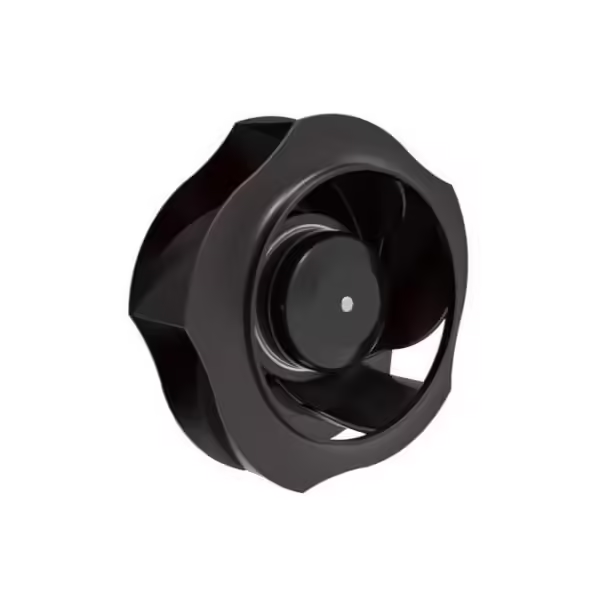
A low noise centrifugal blower is designed to deliver stable airflow and higher static pressure while maintaining minimal sound output. By optimizing impeller geometry, motor balance, and housing design, these blowers significantly reduce operational noise compared to traditional air-moving equipment.
Unlike standard blowers that prioritize airflow alone, low noise centrifugal blowers are engineered with acoustic performance in mind. This makes them ideal for environments where noise control is critical, such as commercial buildings, laboratories, data centers, and industrial facilities with strict noise regulations.
As a manufacturer, we focus on combining airflow efficiency with sound reduction to ensure reliable and quiet operation across a wide range of applications.
Why Noise Reduction Matters in Air Handling Systems
Noise is not just a comfort issue—it directly impacts safety, productivity, and regulatory compliance.
Excessive noise levels can:
- Cause worker fatigue and reduced efficiency
- Lead to non-compliance with occupational noise standards
- Create uncomfortable environments in commercial or residential settings
Low noise centrifugal blowers help address these challenges by maintaining sound levels typically below 70 dB, depending on model and operating conditions. This balance of performance and quiet operation is essential for modern air handling systems.
Key Design Features That Reduce Blower Noise
Several engineering factors contribute to noise reduction in centrifugal blowers:
- Optimized Impeller Design
Smooth blade profiles reduce turbulence and vibration during operation. - Precision-Balanced Motors
High-quality motors minimize mechanical noise and ensure stable rotation. - Acoustic Housing and Insulation
Reinforced casings and optional sound-dampening materials further reduce noise emissions. - Low-Vibration Structure
Rigid frames and advanced bearings prevent resonance and unwanted sound.
These design elements allow centrifugal blowers to perform efficiently without sacrificing acoustic comfort.
Typical Applications for Low Noise Centrifugal Blowers
Low noise centrifugal blowers are widely used across industries where airflow performance and quiet operation are equally important:
- Commercial HVAC Systems for offices, hotels, and shopping centers
- Laboratories and Medical Facilities requiring controlled airflow
- Industrial Ventilation in manufacturing plants and workshops
- Data Centers and Server Rooms for efficient cooling
- Environmental and Air Purification Systems
Their adaptability makes them a preferred choice for both continuous-duty and precision airflow applications.
How to Select the Right Low Noise Centrifugal Blower
Choosing the correct blower requires careful evaluation of operating conditions:
- Airflow and Pressure Requirements
Determine the required CFM and static pressure for your system. - Noise Level Targets
Select models rated for low decibel output to meet site regulations. - Power Supply and Motor Type
Options typically include 120V, 220V, or custom motor configurations. - Installation Environment
Consider space constraints, temperature, and operating duration. - Long-Term Operating Cost
Energy-efficient designs reduce electricity usage and maintenance costs.
Proper selection ensures reliable performance and long service life.
Low Noise Centrifugal Blower vs Other Fan Solutions
When compared to alternative air-moving solutions:
- Vs Axial Fans
Centrifugal blowers provide higher pressure and more controlled airflow. - Vs Standard Blowers
Low noise models offer significantly quieter operation with similar or better efficiency. - Vs Inline Fans
Centrifugal blowers handle complex ducting systems more effectively.
These advantages make low noise centrifugal blowers a superior option for demanding applications.
Performance Specifications to Consider
Key technical parameters help define blower performance:
- Airflow capacity (CFM)
- Static pressure rating
- Noise level (dB)
- Motor efficiency and power consumption
- Housing material and corrosion resistance
As a manufacturer, we provide detailed specifications to help customers select the most suitable blower for their application.
Manufacturing Quality and Customization Options
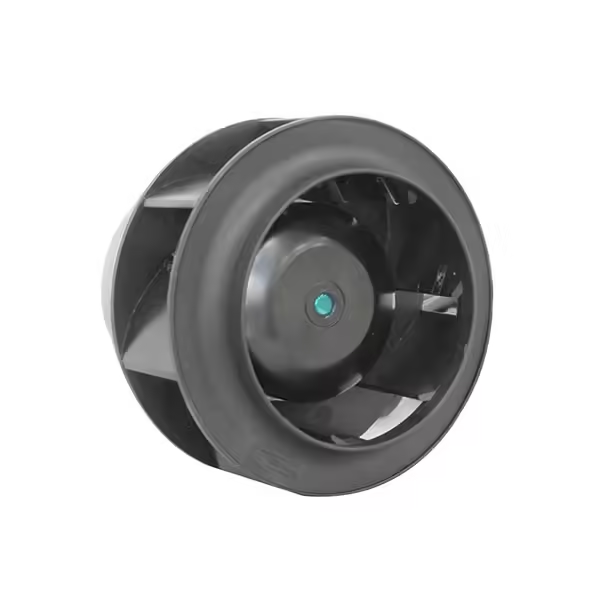
We manufacture low noise centrifugal blowers with a strong focus on durability, efficiency, and acoustic performance. Our production process includes:
- Strict quality control at every stage
- Custom airflow, pressure, and noise level configurations
- OEM and private labeling options
- Technical support from design to installation
This allows us to supply reliable blower solutions for both standard and specialized requirements.
Conclusion
Low noise centrifugal blowers play a critical role in modern ventilation and air handling systems. By combining efficient airflow, high pressure, and reduced noise output, they offer a dependable solution for commercial, industrial, and technical environments.
As an experienced manufacturer, we deliver high-quality low noise centrifugal blowers designed for performance, reliability, and long-term value. If you are looking for a dependable blower solution with minimal noise and maximum efficiency, contact us today for expert support and customized options.
FAQ
Q1: What is a low noise centrifugal blower?
A: A low noise centrifugal blower is designed to provide efficient airflow and high pressure while operating at reduced sound levels, making it suitable for noise-sensitive environments.
Q2: How quiet is a low noise centrifugal blower?
A: Depending on the model and operating conditions, low noise centrifugal blowers typically operate between 50–70 dB, significantly quieter than standard industrial blowers.
Q3: What applications are low noise centrifugal blowers best suited for?
A: They are commonly used in HVAC systems, laboratories, data centers, industrial ventilation, and air purification systems where quiet operation is essential.
Q4: What makes a centrifugal blower low noise?
A: Optimized impeller design, precision-balanced motors, vibration-reducing structures, and sound-insulated housings all contribute to lower noise levels.
Q5: How do I choose the right low noise centrifugal blower?
A: Selection should be based on airflow and pressure requirements, acceptable noise levels, power supply, installation conditions, and long-term energy efficiency.