
Table of Contents
A well-designed ventilation system is essential for maintaining healthy indoor air quality and creating comfortable environments in industrial, commercial, and residential buildings. As modern buildings become more airtight and energy regulations continue to evolve, selecting the right air ventilation solution has become a critical decision for project owners and engineers.
In this guide, we explain how a ventilation unit works, explore common system types and applications, and share practical selection advice from the perspective of a professional manufacturer.
What Is a Ventilation Unit?
Definition and Basic Function
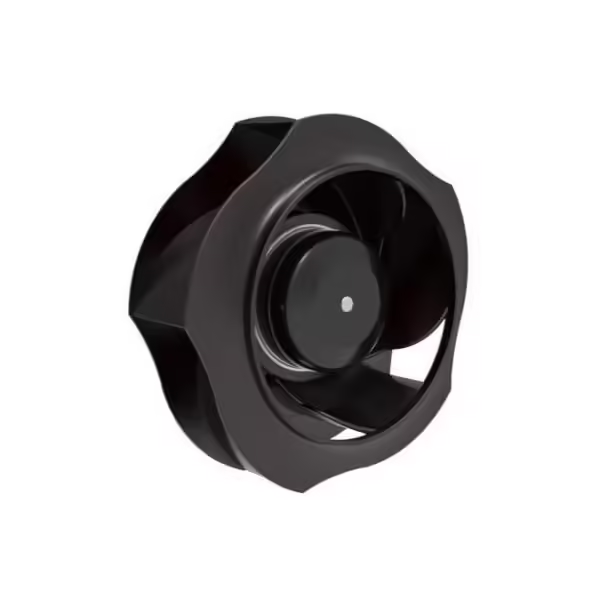
A ventilation unit is a mechanical device designed to introduce fresh outdoor air into a building while removing stale indoor air. This continuous air exchange helps control humidity, reduce airborne pollutants, and improve overall indoor air quality.
Compared with simple exhaust equipment, this type of system offers controlled airflow management, filtration, and pressure balance, making it suitable for demanding applications.
How a Ventilation Unit Works
The system draws fresh air from outside, filters it, and distributes it evenly throughout the indoor space. At the same time, polluted or warm air is extracted and discharged outdoors. Advanced configurations may include heat recovery components and intelligent controls to improve efficiency and reduce energy consumption.
Ventilation Unit vs Exhaust Fan
An exhaust fan only removes indoor air, which can lead to pressure imbalance. In contrast, a dedicated ventilation system ensures balanced air supply and exhaust, providing better comfort and compliance with building standards.
Types of Ventilation Units
Different designs are available to meet various performance requirements and installation conditions.
Mechanical Ventilation Units
These systems use fans and duct networks to control air movement and are widely applied in factories, warehouses, and commercial buildings.
Heat Recovery Ventilation Units (HRV)
Heat recovery models transfer thermal energy from outgoing air to incoming fresh air, helping reduce heating and cooling losses.
Energy-Efficient Ventilation Units
High-efficiency motors and optimized airflow paths allow these systems to operate reliably while lowering long-term operating costs.
Compact Ventilation Units for Limited Space
Compact solutions are suitable for projects with restricted installation space, such as retrofit applications or small mechanical rooms.
Key Benefits of Using a Ventilation System
Improving Indoor Air Quality
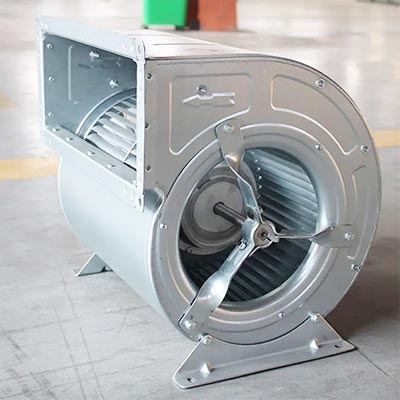
Continuous air exchange helps remove dust, odors, moisture, and harmful particles, creating a healthier indoor environment.
Energy Saving and Efficiency
Energy-efficient designs reduce unnecessary heat loss while maintaining stable airflow performance.
Noise Reduction and Comfort
Optimized internal structures and low-noise components support quiet operation in offices, hotels, and residential buildings.
Long-Term Cost Efficiency
Durable construction and reduced maintenance requirements make these systems cost-effective over their service life.
Ventilation Applications Across Industries
Industrial Buildings
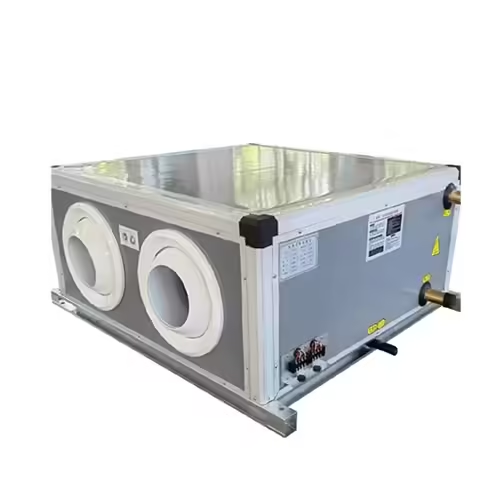
Manufacturing facilities rely on effective air circulation to control heat, fumes, and airborne contaminants.
Commercial Buildings
Office buildings, shopping centers, and hotels use centralized ventilation solutions to ensure comfort and regulatory compliance.
Warehouses and Factories
Large-volume spaces require high-capacity airflow to prevent air stagnation and temperature imbalance.
Hospitals and Laboratories
Medical environments demand precise airflow control, reliable filtration, and consistent system performance.
Residential Buildings
Modern residential projects increasingly integrate mechanical ventilation to improve comfort and air quality.
How to Choose the Right Ventilation Solution
Airflow Capacity and CFM Calculation
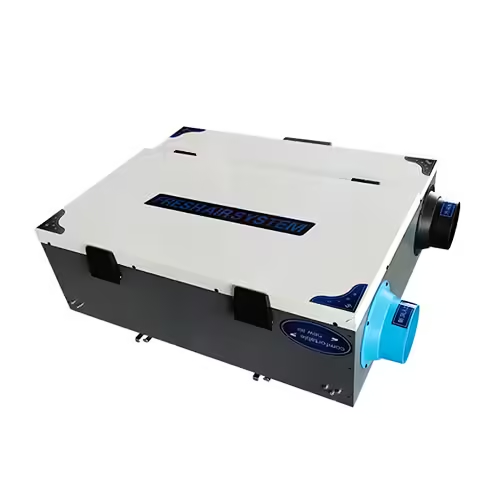
Correct airflow sizing ensures sufficient air exchange without unnecessary energy consumption.
Noise Level and Installation Space
Noise requirements and available installation space should be evaluated early in the design stage.
Energy Efficiency and Power Consumption
Selecting high-efficiency components helps reduce operating costs over time.
Compliance and Project Requirements
Systems should meet local building codes and project-specific technical standards.
Installation and Maintenance Guide
Installation Requirements
Proper duct design, electrical connection, and airflow balancing are essential for stable operation.
Maintenance and Service Life
Regular inspection and filter replacement help extend service life and maintain performance.
Common Installation Mistakes to Avoid
Incorrect sizing and poor duct layout are common issues that can reduce system efficiency.
Custom Ventilation Solutions for OEM and Projects
Why Choose a Custom Design
Custom-built systems allow precise control over dimensions, airflow, control methods, and performance parameters.
OEM & ODM Manufacturing Capabilities
As a manufacturer, we support OEM and ODM services, including branding, technical adaptation, and batch production.
Tailored Solutions for Engineering Projects
Customized equipment is especially valuable for complex industrial and commercial projects with specific requirements.
Why Work Directly with a Ventilation Equipment Manufacturer
Quality Control and Manufacturing Standards
Direct manufacturing ensures strict quality inspection throughout production.
Competitive Pricing and Stable Supply
Factory-direct cooperation reduces costs and improves delivery reliability.
Technical Support and After-Sales Service
Professional support is available from design consultation to after-sales service.
Customization and Fast Lead Time
Direct collaboration enables faster response and flexible customization.
Technical Specifications Overview
| Specification Item | Typical Range / Description |
|---|---|
| Airflow Capacity | 500 – 50,000 m³/h |
| Static Pressure | 150 – 800 Pa |
| Power Supply | AC 220V / 380V, 50Hz / 60Hz |
| Noise Level | ≤ 65 dB(A) |
| Control System | Manual / PLC / Intelligent Control |
| Installation Type | Ceiling-mounted / Floor-mounted |
All parameters can be customized according to project requirements.
Frequently Asked Questions
How long can a ventilation system operate reliably?
With proper maintenance, it can perform efficiently for many years.
Is customization available for engineering projects?
Yes, airflow, size, and control systems can be tailored.
Are these systems suitable for large commercial buildings?
They are widely used in industrial and large-scale commercial projects.
What should I look for in a manufacturer?
Experience, quality control, customization capability, and technical support are key factors.
Conclusion
Selecting the right ventilation solution is essential for improving indoor air quality, ensuring energy efficiency, and maintaining long-term system reliability. By understanding system types, applications, and technical considerations, buyers can make informed decisions for their projects.
As a professional ventilation unit manufacturer, we provide reliable, energy-efficient, and customizable solutions for industrial, commercial, and residential applications. Whether you need standard equipment or OEM products for large-scale projects, our team is ready to support you from design to delivery.
👉 Contact us today to discuss your project and receive a tailored ventilation solution.
mized ventilation unit solution tailored to your needs.
Need Help Choosing the Right Ventilation Unit?
If you’re unsure which ventilation unit is best for your building or project, our experts are here to help. Contact us today for a personalized consultation and get a reliable, energy-efficient ventilation solution tailored to your requirements. Don’t wait—get in touch now and ensure optimal indoor air quality and long-term performance for your facility.