
Welcome to My Blog!
Before we dive into the content, if you’re interested in our products or have any questions, please feel free to visit our Contact Us page on the website. Our team is ready to assist you with inquiries, orders, or any support you may need.
Now, let’s get started on our journey together. I hope you find the content here insightful, engaging, and valuable.
Table of Contents
Introduction
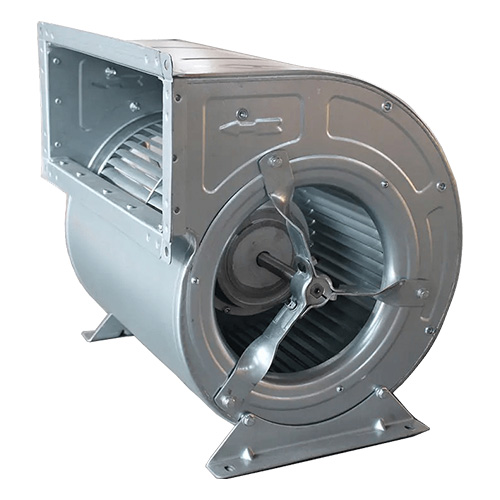
What is a Centrifugal Fan?
A centrifugal fan is a mechanical device that moves air or gas by increasing its velocity through a rotating impeller. Unlike axial fans that move air along the axis of rotation, centrifugal fans direct air radially outward, creating higher pressure. These fans are widely used in HVAC systems, industrial ventilation, and exhaust applications, offering versatility for various airflow and pressure requirements.
Importance of Choosing the Right Fan Type
Selecting the right centrifugal fan type is crucial for maximizing efficiency, minimizing noise, and achieving optimal airflow. Different fan designs, such as forward-curved, backward-curved, or radial types, are suited for specific applications. Choosing the wrong type can lead to increased energy consumption, operational issues, and higher maintenance costs.
Types of Centrifugal Fans
Forward-Curved Centrifugal Fans
Forward-curved fans feature blades that curve in the direction of rotation. They are ideal for low to medium pressure applications and are commonly used in HVAC systems. Pros include quiet operation and compact design, but they may be less efficient at high pressures.
Backward-Curved Centrifugal Fans
Backward-curved fans have blades that curve against the rotation direction. They offer high efficiency, lower energy consumption, and are suitable for medium to high-pressure applications. They are widely used in industrial ventilation and air conditioning systems.
Radial Centrifugal Fans
Radial fans are designed with straight blades extending outward from the hub. They are robust and handle high-pressure applications, often used in dust collection, exhaust systems, and industrial processes where debris may be present.
Comparison Table of Centrifugal Fan Types
| Fan Type | Pressure | Efficiency | Noise Level | Typical Applications |
|---|---|---|---|---|
| Forward-Curved | Low-Med | Medium | Low | HVAC, Light Ventilation |
| Backward-Curved | Med-High | High | Medium | Industrial Ventilation, Air Conditioning |
| Radial | High | Medium | High | Dust Collection, Exhaust Systems |
How to Choose the Right Centrifugal Fan Type
Based on Application
Consider the specific application when selecting a centrifugal fan type. HVAC systems, industrial ventilation, exhaust gas treatment, and air conditioning each have unique airflow and pressure requirements.
Based on Performance Requirements
Evaluate airflow, static pressure, noise level, and energy efficiency. For high-pressure applications, backward-curved or radial fans are recommended. For quieter, lower-pressure needs, forward-curved fans are ideal.
Cost vs. Performance Considerations
Balancing initial cost with long-term energy efficiency and maintenance requirements ensures the best return on investment. High-efficiency fans may have a higher upfront cost but save energy and reduce operational costs over time.
Technical Performance of Centrifugal Fans
Efficiency and Energy Consumption
Efficiency varies between fan types. Backward-curved fans are typically the most energy-efficient, while radial fans may consume more energy but provide higher pressure capacity.
Noise Levels and Acoustic Performance
Forward-curved fans are generally quieter, making them suitable for indoor HVAC systems. Radial fans may produce higher noise levels, which should be considered in sensitive environments.
Flow and Pressure Characteristics
Forward-curved fans generate higher airflow at lower pressure, backward-curved fans provide moderate airflow with higher pressure, and radial fans deliver high-pressure airflow for industrial processes.
Industry Applications of Centrifugal Fan Types
HVAC Systems
Centrifugal fans maintain indoor air quality and comfort by circulating air in residential, commercial, and industrial buildings. Forward-curved and backward-curved types are most commonly used.
Industrial Ventilation
In factories and manufacturing plants, centrifugal fans provide proper ventilation, remove dust, fumes, and excess heat. Backward-curved and radial fans are preferred for heavy-duty applications.
Exhaust Gas Treatment
Centrifugal fans help in treating exhaust gases by moving contaminated air through scrubbers or filters, ensuring safe emissions. Radial fans are ideal for high-pressure exhaust systems.
Air Conditioning Systems
Air conditioning systems use centrifugal fans to distribute conditioned air efficiently. Proper fan type selection ensures optimal airflow, quiet operation, and energy savings.
Installation and Maintenance
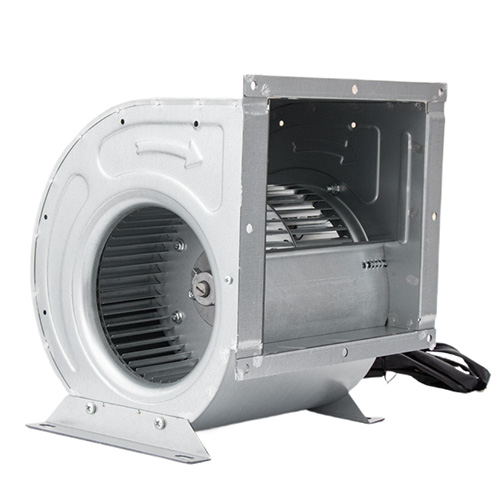
Step-by-Step Installation Guide
Proper installation ensures efficiency and longevity. Key steps include secure mounting, correct alignment, and proper connection to ductwork.
Regular Maintenance Tips
Routine inspection of bearings, blades, and motor components helps prevent failures. Clean fans regularly to maintain airflow and efficiency.
Troubleshooting Common Problems
Common issues include unusual noise, vibration, and reduced airflow. Troubleshooting involves checking alignment, wear, and motor performance.
How to Maximize Lifespan of Your Centrifugal Fan
Regular maintenance, operating within recommended limits, and avoiding debris buildup can significantly extend the lifespan of a centrifugal fan type.
Conclusion
Understanding centrifugal fan types is essential for selecting the right fan for your application. By considering performance, efficiency, noise, and application requirements, you can make an informed decision that saves energy and reduces long-term costs. Proper installation, regular maintenance, and timely troubleshooting ensure optimal performance and a long lifespan for your centrifugal fan.
For detailed technical guidance or product consultation, explore our centrifugal fan selection resources or contact our experts today.
FAQ
What are the main types of centrifugal fans?
The main types are forward-curved, backward-curved, and radial centrifugal fans, each designed for different airflow and pressure requirements.
How do I choose the right centrifugal fan type?
Consider your application, airflow, pressure, noise level, and energy efficiency to select the most suitable fan type.
What is the difference between forward-curved and backward-curved fans?
Forward-curved fans are quieter and best for low-pressure systems, while backward-curved fans are more energy-efficient and handle higher pressures.
Where are centrifugal fans commonly used?
They are widely used in HVAC systems, industrial ventilation, exhaust gas treatment, and air conditioning systems.
How can I maintain a centrifugal fan to extend its lifespan?
Regularly inspect and clean blades, check bearings and motors, and ensure the fan operates within recommended limits.
Looking for the perfect centrifugal fan type for your project? Explore our full range of products, download detailed technical guides, or contact our experts today to find the solution that meets your efficiency and performance needs.